Welcome to the United Nations

Reports and Policy Documents

2025

  • 11 Dec 2025

    Gaza’s health system for mothers and newborns has been “decimated”, the UN said on Thursday, with Israeli attacks destroying almost all hospitals, cutting off medical supplies and driving sharp rises in maternal deaths, miscarriages and newborn fatalities amid mass displacement and hunger.

  • 11 Dec 2025

    Pregnant women took shelter in a bunkerised maternity unit in the Ukrainian city of Kherson last week, after a hospital was struck just 1.5 km from the frontline.

  • 11 Dec 2025

    More than half a million people have now been uprooted by escalating violence in eastern Democratic Republic of the Congo (DRC) the UN said on Thursday, warning that the M23 rebel offensive is driving a rapidly worsening humanitarian emergency.

  • 10 Dec 2025

    TRIPOLI - Today, on Human Rights Day, we are reminded that human rights are not distant ideals—they are the essentials of everyday life: dignity, freedom of...

  • 10 Dec 2025

    TRIPOLI – Thirty-five participants from the UN in Libya’s Ra’idat training programme joined UNDP Resident Representative, Sophie Kemkhadze, and UNSMIL officials for a discussion on female and youth leadership...

  • 10 Dec 2025

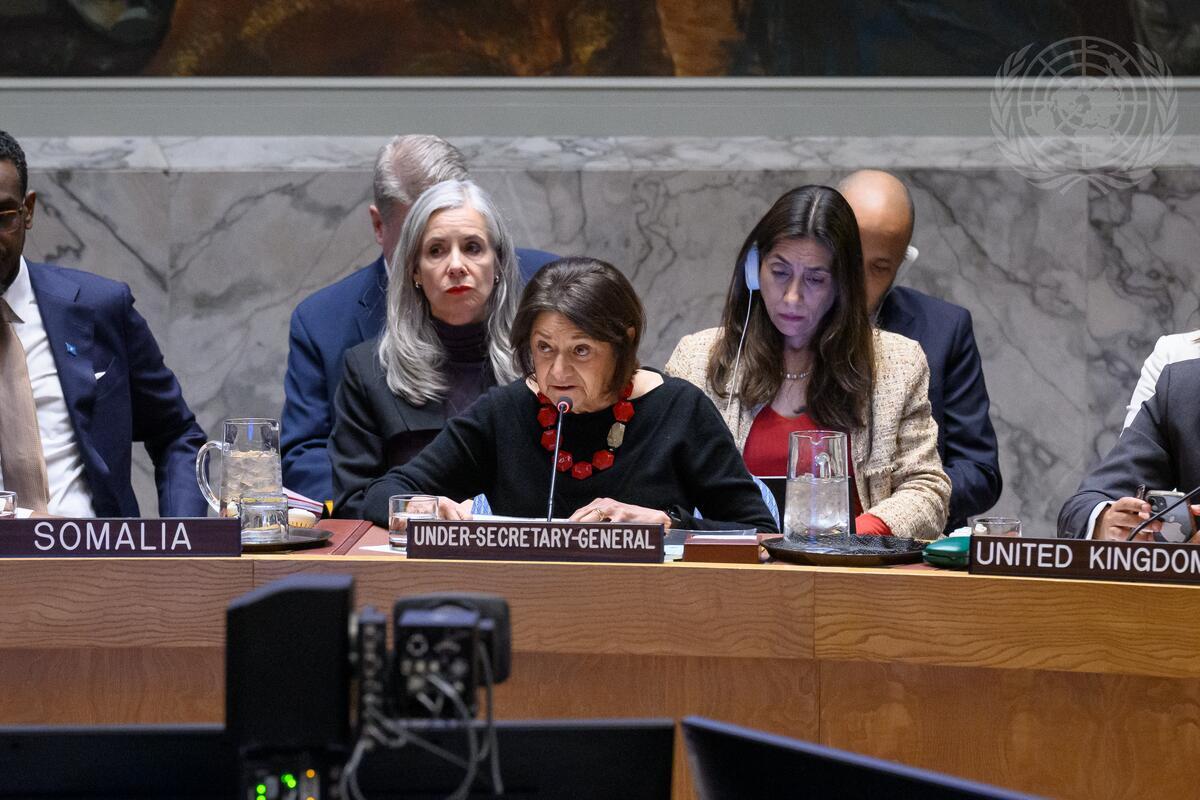
    Under-Secretary-General for Political and Peacebuilding Affairs Rosemary DiCarlo's 

    Remarks at the Implementation Meeting of the Declaration of Principles for International Election Observation

    Geneva, 10 December 2025


    Distinguished members of the Convening Committee,

    Representatives of endorsing organizations,

    Colleagues and friends,

    It is a great honour to welcome you, on behalf of the United Nations, to this anniversary meeting of the Declaration of Principles for International Election Observation.

    As the Secretary-General observed [in his video remarks], the principles in the Declaration are as valid as when they were adopted twenty years ago.

    But the world in which we try to apply these principles has changed almost beyond recognition.

    In most countries elections go smoothly and result in peaceful transfers of power. But today, democracy faces challenges that we did not foresee in 2005, such as cyber threats, and the effects of profound geopolitical shifts.

    We also continue to face more familiar headwinds, often engineered by incumbents to stay in power irrespective of the popular will. These include political polarization, information manipulation, violence, shrinking civic space, suppression of opposition voices, and logistical hurdles.

    Too many elections follow the letter of the law but don’t involve a genuine, inclusive process. People don’t feel heard or represented. They lose trust in their governments and in each other.

    I am pleased that you will have the opportunity at this meeting to reflect in depth on how the electoral observation community can navigate these complexities.

    Excellent background papers have already been prepared to inspire conversation but allow me to add some thoughts of my own to the mix.

    Taking the categories offered by the Secretary-General, let me ask you how the election observation community can adapt or contribute.

    First, transparency.  

    The challenges  of new technologies and information integrity are clear. What is less clear is how to distinguish election-related disinformation from “general” disinformation, and, thus where responsibility lies for tackling the problem.

    The observation community can make an important contribution by further defining its role in the realm of information integrity, and by developing new methodologies to match the complexities.   

    Second, participation and inclusion.

    We look to States to implement their commitments to the equal treatment of men and women, and to the inclusion of minorities and persons with disabilities.

    Your findings and recommendations on these issues are critical, particularly to keep attention focused on commitments made.

    And these goals can also guide observation missions themselves. How can the composition of observation teams model the ideals of inclusion?

    Young people deserve special consideration. This past year we have again seen the consequences when young generations feel systemically excluded from politics.

    The call for governments to integrate the voices of youth is not new.

    But it needs to be heard even more clearly and urgently, including from observers and the assistance community.

    As a basis for better analysis and policy design, the UN has begun encouraging electoral authorities to publish voter and candidate data disaggregated by age and gender.

    I would welcome your support for this, including similar encouragements through your recommendations.

    Third, protection.

    The election observation community also faces extreme pressures, including threats and acts of violence. 

    I hope that this gathering will enable you to share lessons on how to manage these impediments to your work and to find solidarity in this community.

    Which brings me to the fourth area, namely partnership.

    When the Declaration was adopted, it had twenty-one endorsing organizations. Today we have fifty-four.

    As the Secretary-General recalled, the UN is seeing growing demand for electoral assistance. In an increasingly complex global context, this places an ever-higher premium on working effectively together.

    Which is why I am so pleased to see you all gathered here on this anniversary.

    I trust that you will come away from these two days with a shared sense of how the Declaration can remain part of the normative scaffolding of genuine elections.

    May your discussions in the coming days be productive, forward-looking, and guided by the same spirit of collaboration that inspired the Declaration twenty years ago. 

    Thank you. 

  • 10 Dec 2025

    NEW YORK - The UN Secretary-General’s Deputy Special Representative for Afghanistan, Georgette Gagnon, today briefed the Security Council on the situation in Afghanistan.

    ...
  • 10 Dec 2025

    Briefing to the United Nations Security Councilby the Secretary-General’s Special Representative for Afghanistan, Georgette Gagnon, New York, 10 December 2025

    ...
  • 10 Dec 2025

    NEW YORK - The following is the transcript of the briefing by the Deputy Secretary-General’s Special Representative for Afghanistan, Georgette Gagnon, to the Security Council on the situation in Afghanistan...

  • 10 Dec 2025

    Under-Secretary-General Rosemary A. DiCarlo's 

    Opening Remarks at the 2025 CSO-UN Dialogue on Peacebuilding

    Geneva, 10 December 2025


    Distinguished civil society representatives, excellencies, colleagues,

    It is a pleasure to address you today at this third annual CSO-UN Dialogue on Peacebuilding. I am grateful to see so many of you here today – peacebuilders, youth and women’s networks, community leaders and human rights defenders from across the globe.

    Your presence reminds us that peacebuilding is at its core, a people-centered endeavor. Institutions matter, but it is people and communities who insist every day that peace is possible.

    We meet at a moment of profound global turbulence. Geopolitical tensions continue to rise, adding to the already considerable strain on the tools for safeguarding international peace and security.

    Armed conflicts have surged to unprecedented levels, with one in eight people regularly exposed to violent conflict. Climate change, environmental degradation, and competition over natural resources continue to exacerbate insecurity and stoke instability.

    Even in places spared by war, polarization, manipulation of information and declining trust in institutions erode the social contract and threaten stability. All these factors make prevention harder and peace more fragile, while threatening sustainable development.

    In short, we are facing complex, interconnected challenges. None of us – Member States, regional organizations, the UN, or civil society –can address them alone. This is why the theme of this Dialogue, focused on comprehensive, multi-level action, is so timely and relevant. And among the multiple actors that must come together to meet this defining moment, you play a critical role.

    As the Secretary-General underscores in his policy brief on A New Agenda for Peace, civil society is one of the UN’s most valued partners.

    You are often the first to detect risks, the first to respond to emerging tensions, and the first to support communities in crisis. You are indispensable in mediating disputes, documenting violations, rebuilding trust and holding institutions accountable.

    We are proud to support this work, including through the Peacebuilding Fund. And as the following examples demonstrate, the impact of your work is undeniable:

    • In Niger, local NGO Adkoul supported 60 mediators—half of them young women—in Tahoua, who helped resolve a decade-long conflict between two Tassara communities. Across the communes, they facilitated intergenerational dialogues on gender, youth, peace and Islam, resulting in a framework for youth participation in local decision-making.
    • In Sri Lanka, civil society has revived regional and issue-based dialogue through a new common platform and launched joint initiatives on securing land rights. They provide psychosocial support for victims of violence, and address gender-based violence in their communities.
    • In Burundi, a nationwide network of women mediators has trained more than 500 women in mediation, peacebuilding and trauma healing. They addressed over 34,000 conflicts—from family and land disputes to gender-based violence and political tensions—resolving more than 60% and referring the rest to local authorities. Such impact is the women, peace and security agenda in action.

    This ongoing, often unseen, work by civil society is unfolding as an overwhelming majority of Member States at the global level reaffirms prevention and peacebuilding as collective priorities.

    The Pact for the Future adopted last year reflects this renewed Member State focus, placing people at the center of peace efforts and emphasizing the importance of inclusive governance, civic space and the meaningful participation of women, youth, and broader civil society. It recognizes that peace is an endeavor that needs to engage the whole of society.

    The twin resolutions from the recently concluded 2025 UN Peacebuilding Architecture Review reaffirm prevention as a highly cost-effective investment and emphasize that it must be nationally led and owned.  The resolutions also stress the importance of partnerships with civil society organizations, especially local peacebuilders, grassroot organizations, and women- and youth-led organizations.

    Ladies and gentlemen,

    These commitments create momentum. But momentum only matters if it translates into better outcomes for communities. 

    This is where your insight, advocacy and leadership remain essential. The CSO-UN Dialogue should not be just another meeting – it should continue to reinforce an infrastructure for cooperation between global decision-making and local realities.

    We should use this platform to elevate your insights into global policy spaces.

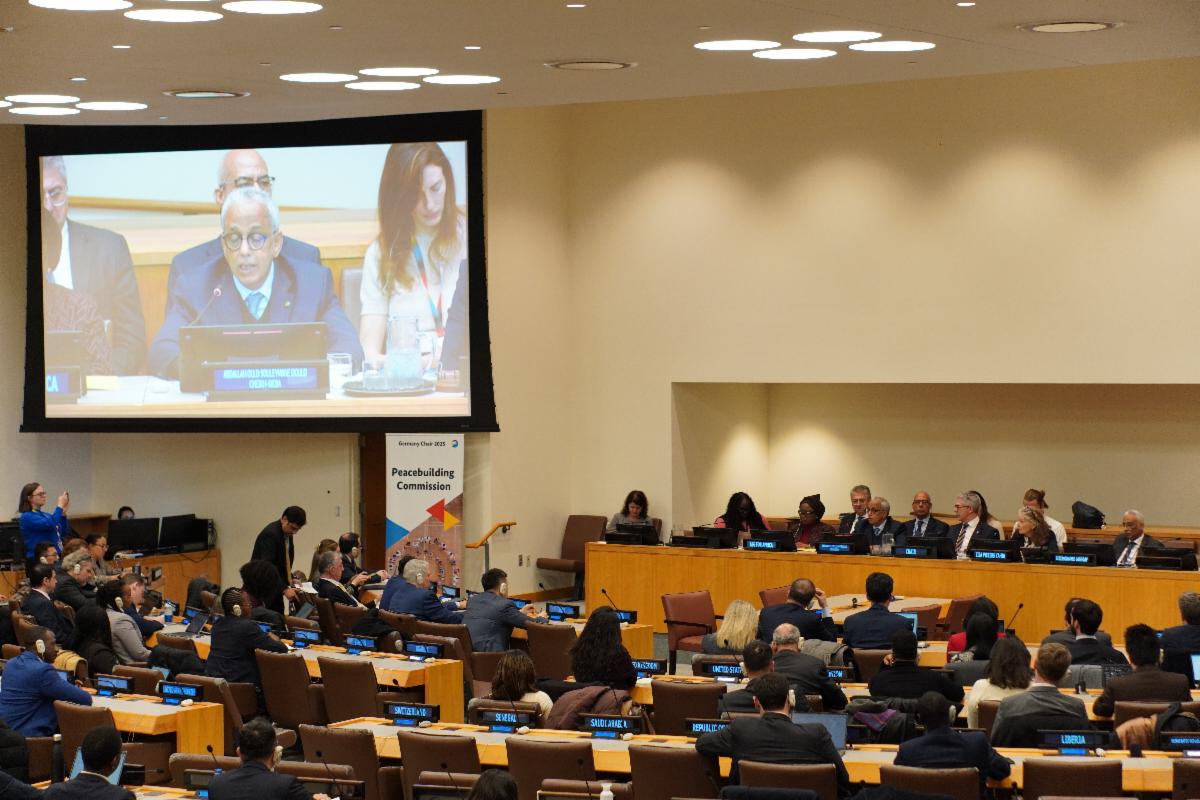
    The Peacebuilding Commission is meeting during this Dialogue. It is an immediate opportunity to turn your recommendations into inputs for Member States as they consider how the recent Peacebuilding Architecture Review can lead to more effective implementation and impact.  

    My hope for this Dialogue is that we leave Geneva with a clear sense of how to keep this platform dynamic and relevant: how we maintain the network, how we ensure follow up and how we make our work for peace ever more consequential.

    Thank you.

  • 10 Dec 2025

    In Gaza, as airstrikes, shelling and gunfire continued to kill and maim Palestinians, UN human rights chief Volker Türk on Wednesday rejected suggestions by the Israeli military that the so-called “Yellow Line” of concrete blocks it has erected inside the enclave represented a new border.

  • 10 Dec 2025

    Afghanistan’s worsening humanitarian crisis is being driven by the accelerating erosion of fundamental rights – especially for women and girls – alongside mass displacement, economic decline and shrinking aid, senior UN officials warned on Wednesday.

  • 10 Dec 2025

    Intensifying fighting in eastern Democratic Republic of the Congo (DRC) has claimed more than 70 civilian lives, displaced over 200,000 people and cut thousands off from food assistance, prompting UN warnings of a rapidly expanding humanitarian emergency spilling across borders.

  • 9 Dec 2025

    KABUL - On Human Rights Day, the United Nations Assistance Mission in Afghanistan (UNAMA) joins the global call to recognize human rights as our everyday essentials—the foundation that makes life dignified and provides for...

  • 9 Dec 2025

    Officer-in-charge for Europe, Central Asia and the Americas Kayoko Gotoh

    Remarks to the Security Council on the situation in Ukraine

    New York, 9 December 2025

    Madam President,         

    As the holiday season approaches, Ukrainian civilians are preparing to end yet another difficult year at war – without a ceasefire and with uncertain prospects for lasting peace.

    Despite cautious optimism around resumed diplomatic efforts, 2025 has been one of the deadliest for the people of Ukraine.

    Civilian casualties between January and November this year were 24 percent higher compared to the same period in 2024.

    These figures continue to increase, as the Russian Federation escalates its aerial attacks across Ukraine.

    On the night of 5 to 6 December, dozens of civilians were injured and hundreds of thousands left without power and other basic utilities, following large-scale Russian missile and drone strikes, targeting energy and transport infrastructure in ten regions across Ukraine.

    The night before, a 12-year-old boy was killed in a drone attack on a village in Dnipropetrovsk region.

    A week earlier, on 29 November, a massive Russian drone and missile attack reportedly killed six people and injured dozens of others in Kyiv, Dnipropetrovsk and Kherson regions.

    This attack also left more than 600,000 people in the Kyiv region without power, under freezing winter temperatures.

    On 23 November, a drone strike on Ukraine’s second-largest city, Kharkiv, reportedly killed four people.

    In total, since the start of the Russian Federation’s full-scale invasion of Ukraine in February 2022, the Office of the High Commissioner for Human Rights (OHCHR) has verified that 14,775 Ukrainian civilians, including 755 children, have been killed. 39,322 more, including 2,416 children, have been injured. These numbers only represent the verified casualties. Actual figures are likely significantly higher.

    The Russian Federation continues to target Ukraine’s civilian infrastructure. 

    Systematic attacks on energy infrastructure in the middle of winter threaten to leave millions without reliable heating, water and public transportation as temperatures drop.

    People in high-rise buildings cannot use elevators, which leaves the elderly and persons with disabilities trapped in their homes.

    This year alone, more than 340 educational facilities in Ukraine have been damaged or destroyed, depriving children of their right to education. 

    Local authorities from front-line communities of Donetsk, Kharkiv, Kherson, and Sumy regions reported that access to essential services had collapsed: food shops and pharmacies are closed, medical personnel has left, and electricity cuts have lasted for more than two years in some areas.

    These deprivations, in addition to the horrors of daily indiscriminate attacks, are driving further large-scale displacements.

    At the same time, local authorities from communities across the border in the Russian Federation also continue to report new civilian casualties from regular attacks launched by the Ukrainian armed forces. Damage to civilian infrastructure is also reported as a result of long-distance Ukrainian strikes on military and energy sites in the Russian Federation.

    Due to lack of access and limited public information, the United Nations is not in a position to verify these reports.

    As has been stressed at all our briefings, I reiterate that attacks on civilians and civilian infrastructure, including energy infrastructure, are prohibited under international law. No matter where they occur, they are unacceptable and must stop.

    My colleague from the Office for the Coordination of Humanitarian Affairs will share more information about the humanitarian situation in Ukraine and the UN response through the winter.

    Madam President,      

    The United Nations has repeatedly warned against any action that could further escalate or expand this devastating war, now well in its fourth year.

    Following repeated alleged violations of airspace of several European countries, we are following with concern the recent reported incidents involving shipping and port infrastructure in the Black Sea.  

    On 5 December, Bulgarian authorities launched efforts to evacuate the crew of an oil tanker that caught fire off the Black Sea port of Ahtopol. This was one of the two Russian tankers reportedly hit on 29 November by Ukrainian naval drones in the Turkish economic zone.

    Earlier, in a separate incident on 2 December, another Russian-flagged tanker, on its way from Russia to Georgia, allegedly came under a drone attack off the Turkish coast. 

    There have also been reported Russian attacks on port infrastructure in the Ukrainian port of Odesa, as well as alleged Ukrainian attacks on the Azov Sea port of Temryuk in Russia’s Krasnodar region.

    While no casualties were reported, these incidents represent yet another step in the current dangerous cycle of escalation.

    We continue to urge all concerned to de-escalate tensions and to prevent the risk of further expansion of the conflict.  

    This certainly also applies to the immense danger the war poses to nuclear sites.

    Despite the efforts by the International Atomic Energy Agency (IAEA) to restore power lines at Ukraine’s Zaporizhzhia Nuclear Power Plant, the plant continues to experience dangerous power interruptions as a result of ongoing attacks in its vicinity, including most recently during the Russian attacks on 5-6 December.

    IAEA has also conducted a comprehensive safety assessment of the New Safe Confinement at the Chornobyl site, which was severely damaged in a drone strike in February. According to the assessment, the Confinement had lost its primary safety functions, including the confinement capability. No permanent damage to its load-bearing structures or monitoring systems however was found.

    Any military actions endangering the safety and security of nuclear plants are unconscionable, irresponsible and must immediately cease.

    Madam President,      

    We remain deeply concerned about systematic violations of human rights and international humanitarian law in the areas of Ukraine occupied by the Russian Federation, as reported by OHCHR. These violations undermine the principles of international humanitarian law set to safeguard human dignity and the protection of civilians.

    We recall the international obligations with regards to treatment of prisoners of war, including related to access to information regarding their places of detention.

    We are encouraged by the earlier exchanges of prisoners of war between Ukraine and the Russian Federation and urge their continuation, as well as scaled-up returns of Ukrainian children and civilian detainees without delay.

    Madam President,        

    Since the beginning of the full-scale war nearly four years ago, the people of Ukraine have not only shown remarkable resilience to endure the horrible consequences of the war, but also determination to build a peaceful, democratic and prosperous future for their country.

    We have seen this consistently in the action of Ukrainian civil society, in particular organizations led by women and young people.

    People of Ukraine want peace that is just and lasting.

    Meeting their aspirations and ensuring the long-term stability of the region must remain our collective focus and priority.

    That is why we remain hopeful that the ongoing diplomatic efforts, led by the United States, can help bring this war to a negotiated end.

    The Secretary-General has repeatedly called for a full, immediate and unconditional ceasefire.

    Immediate de-escalation in fighting, including a halt to ongoing attacks on critical civilian infrastructure, would not only spare civilian lives, but also bring added momentum to ongoing diplomatic efforts.

    We urge all stakeholders to actively engage in and support an inclusive diplomatic process in pursuit of a just, lasting, and comprehensive peace.

    Achieving a just, lasting and comprehensive peace in Ukraine requires that any settlement fully upholds Ukraine’s sovereignty, independence and territorial integrity within its internationally recognized borders, and is in line with the UN Charter, international law, and relevant UN resolutions.          

    The United Nations remains ready to support all meaningful efforts to this end.

    Thank you.


  • 9 Dec 2025

    The Deputy Special Representative of the Secretary General, Stephanie Koury, discussed the priorities and recommendations of Libyan women in a consultation in Tripoli

    ...
  • 9 Dec 2025

    The Security Council is meeting in New York for a high-stakes briefing on Ukraine, called by six members amid rising civilian casualties and renewed strikes on energy infrastructure as winter sets in. It comes as Washington’s 28-point peace proposal is being revised following pushback from Kyiv and European allies, and after talks in Moscow and Florida failed to deliver concrete progress. Today’s meeting will gauge where diplomacy stands. Follow live below and UN News app users can click here. For in-depth meetings coverage, go here.

  • 9 Dec 2025

    With temperatures plunging below freezing and cities facing long, daily power cuts, Ukrainian civilians are again bracing for winter under fire, as UN officials warned the Security Council that intensified attacks on energy infrastructure and shrinking aid budgets are taking a major toll.

  • 9 Dec 2025

    Mothers who’ve been left starving in Gaza are now giving birth to underweight or premature babies who die in intensive care units or struggle to survive as they endure acute malnutrition, the UN Children’s Fund (UNICEF) warned on Tuesday.

  • 8 Dec 2025

    A year after the fall of the Assad regime opened the door to political and judicial reform, Syria’s future is still precarious.

  • 8 Dec 2025

    The Organization for Security and Co-operation in Europe (OSCE) chief on Monday urged the UN Security Council to uphold core principles of sovereignty, territorial integrity and human rights, warning that Russia’s war in Ukraine continues to undermine European security. 

  • 8 Dec 2025

    Civilians across Ukraine endured a surge in deadly strikes over the weekend, with the UN warning of an “alarming pattern” of intensifying hostilities and mounting damage to essential services as temperatures continue to drop.

  • 8 Dec 2025

    As Sudan’s civil war intensified on Monday, top UN officials condemned the killing of dozens of children in drone strikes in South Kordofan state – and the targeting of first responders trying to help the wounded.

  • 7 Dec 2025

    The Special Representative of the Secretary-General of the United Nations for West Africa and the Sahel, Mr. Leonardo Santos Simão, has followed...

  • 7 Dec 2025

    The UN Secretary-General has marked the first anniversary of the collapse of Bashar al-Assad’s regime, calling the moment “a day to honor [Syrians’] sacrifices and to renew the aspirations that fueled the historic change in the country.”

  • 7 Dec 2025

    Talking to journalists earlier this week on his final day as the first UN Global Advocate for Persons with Disabilities in Conflict and Peacebuilding Situations, Giles Duley said he felt he had failed in his core mission. More importantly, he added, the system itself has failed.

  • 5 Dec 2025
    A brief roundup of United Nations-related political and peacebuilding events and developments globally.

    Special Representative Al Hassan delivers his final Security Council briefing as UNAMI mandate concludes

    On 2 December, Special Representative of the Secretary-General (SRSG) and Head of the United Nations Assistance Mission for Iraq (UNAMI) Mohamed Al Hassan delivered a final briefing to the Security Council before the mission’s mandate ends on 31 December. He reflected on the country’s evolution since UNAMI’s establishment 22 years ago, from adopting a new Constitution to the elections this November, and expressed deep appreciation to the Iraqi Government and people for their cooperation and support in the implementation of UNAMI’s mandate. “UNAMI’s departure does not mark an end to the Iraq-UN partnership,” the SRSG said. “Rather, it represents the start of a new chapter rooted in Iraq’s leadership of its own future.” 

    Read his full remarks

    Personal Envoy continues consultations with political leaders in Cyprus

    On 5 December, Personal Envoy of the Secretary-General (PESG) on Cyprus María Ángela Holguín Cuéllar met with Tufan Erhürman, the Turkish Cypriot leader, as part of her ongoing engagement to support the UN Cyprus talks. Speaking to the media following the meeting, the PESG said she will host a meeting next week with the two Cypriot leaders. Holguín is scheduled to meet the Greek Cypriot leader, Nikos Christodoulides, on 6 December, continuing her outreach to both communities as she gathers views to inform the next steps in advancing dialogue toward a comprehensive settlement. 

    PBC discusses upcoming youth, peace and security dialogue with the Security Council

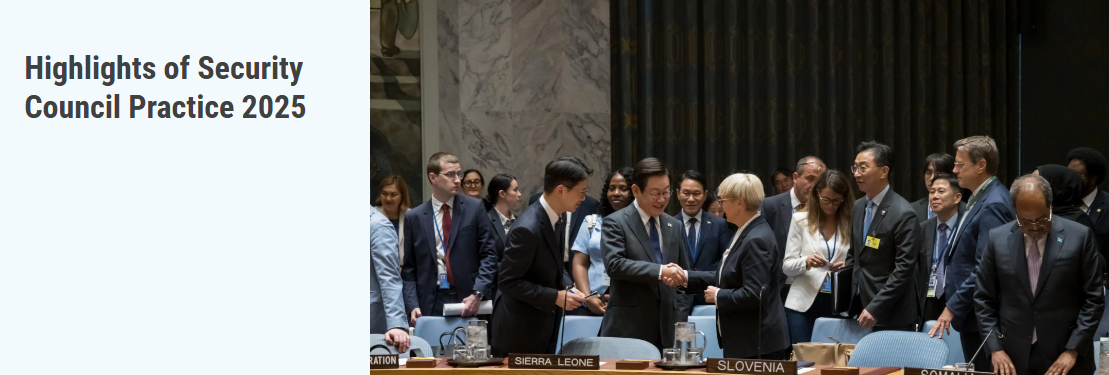
    On 3 December, the Peacebuilding Commission (PBC) held an expert-level meeting on youth, peace and security to prepare for an Ambassadorial-level Informal Interactive Dialogue between the Security Council and the PBC Bureau on Youth, Peace, and Security on 9 December. Briefers included the PBC Chair (Germany), the President of the Security Council for December (Slovenia), and the Chief of the Partnerships and Strategy Branch in DPPA/PBSO. The Chair welcomed inputs and views from members of the Commission to inform the key messages that the PBC Bureau will convey to the Security Council. Member States welcomed the exchange, reaffirmed the importance of the full, equal, meaningful and safe participation of young people in all stages of conflict prevention, conflict resolution, and peacebuilding processes, and commended the Presidency of the Security Council for their leadership in strengthening the linkages between the Council and Commission.

    UNSMIL supports Libyan authorities in adopting roadmap to implement military and security code of conduct

    On 4 December, the United Nations Support Mission in Libya (UNSMIL), working with the Libyan ministries of defence, interior and foreign affairs, concluded a two-day technical symposium focused on operationalizing the national Code of Conduct for Military and Security units. Senior officials from relevant ministries, the Chief of Armed Forces Staff, and members of parliamentary security committees reviewed measures to strengthen accountability, legal compliance and professional standards. The symposium adopted a roadmap to guide nationwide implementation of the Code. 

    Read more

    Office of the Special Envoy convenes 39th Technical Support Committee meeting of the PSC Framework

    On 2 December, the Office of the Special Envoy of the Secretary-General for the Great Lakes Region convened the 39th meeting of the Technical Support Committee of the Peace, Security and Cooperation (PSC) Framework for the Democratic Republic of the Congo and the region in Nairobi. The session brought together regional organizations, including SADC, the African Union, and the ICGLR, to review recent political and security developments and assess progress in ongoing peace processes. Discussions focused on advancing implementation of the Action Plan for the revitalization of the PSC Framework. 

    Preventive Diplomacy Academy hosts virtual session on intercultural communication, diplomacy and conflict

    On 3 December, the United Nations Regional Centre for Preventive Diplomacy for Central Asia (UNRCCA) organized an online session for the 2025 Preventive Diplomacy Academy (PDA) cohort focused on the role of intercultural communication in diplomacy and conflict prevention. Participants discussed cases of intercultural misunderstanding, examined analytical frameworks and worked through scenario-based exercises. Preventive Diplomacy Academy supports the five Central Asian states in enhancing regional cooperation and preventing conflict through a deeper understanding of the political, cultural, and social dynamics shaping the region. 

    Read more

    From coffee to glamping: how former combatants are reimagining their future in Cauca

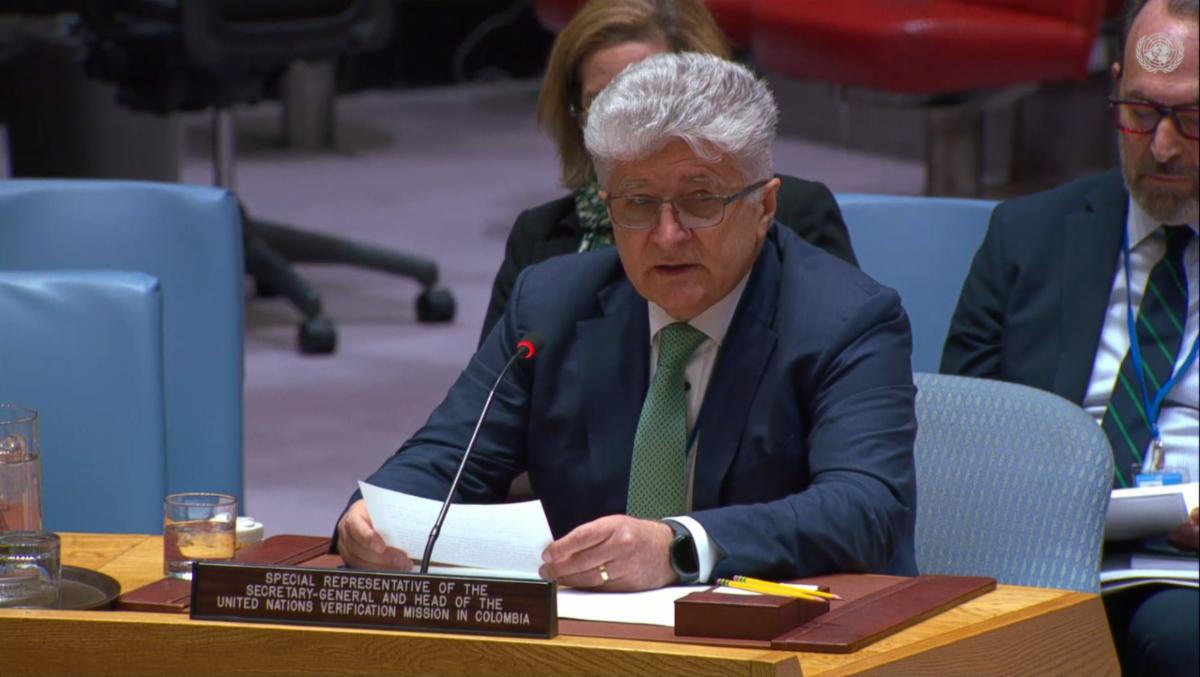
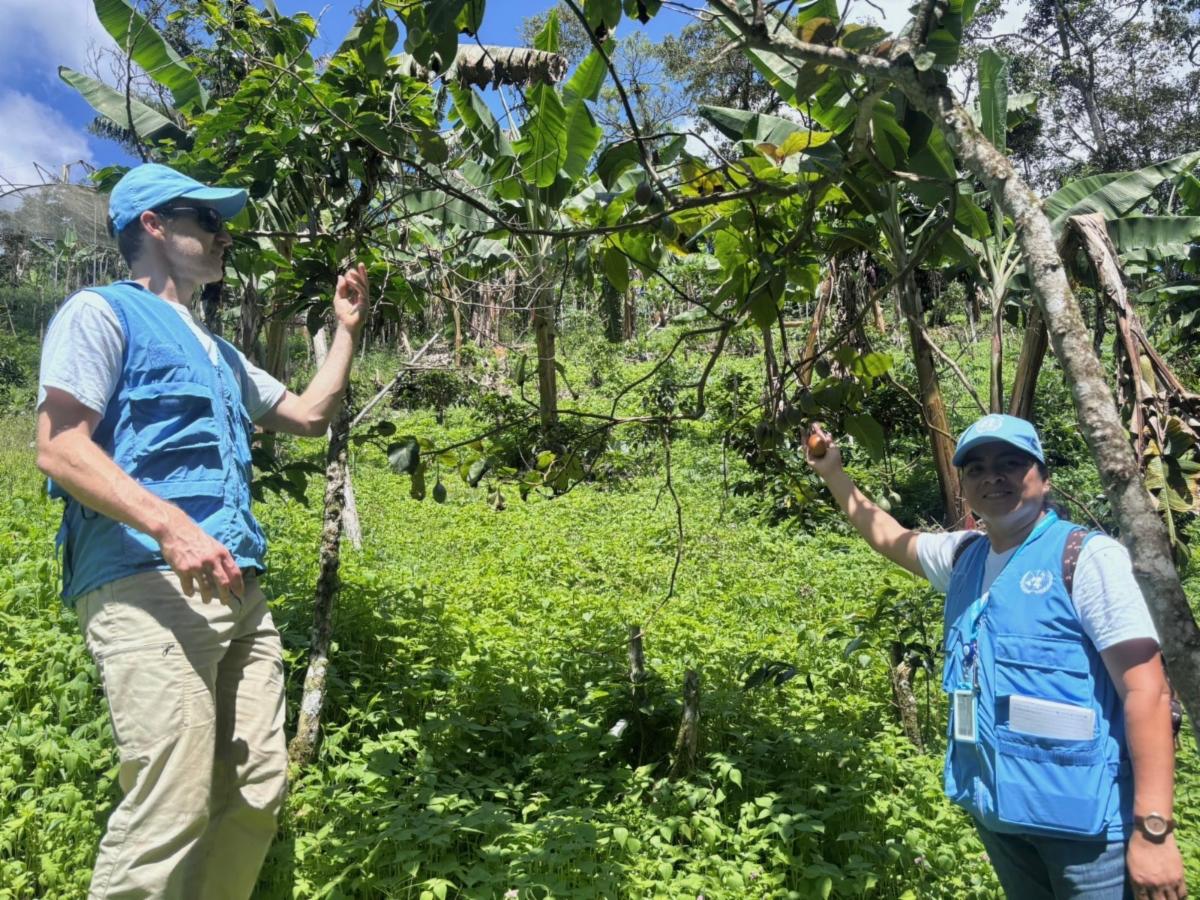
    On 4 December in Timbío in the Cauca Department, the SRSG and the Head of the UN Verification Mission in Colombia, Miroslav Jenča, and his team visited Finca Las Veraneas to learn about a new “glamping” initiative developed by former combatants—an effort led notably by women and linked to the emblematic coffee project Café Sabor La Esperanza. The cooperative is inaugurating four glamping sites as part of its broader reintegration process, expanding economic opportunities that combine community development, environmental stewardship, and entrepreneurship. Despite ongoing security challenges, former combatants continue to strengthen their internationally recognized coffee production while advancing green and responsible tourism. These initiatives demonstrate how sustainable peace is built from the territory, through resilience, collective leadership, and long-term vision. The Mission will continue to accompany these efforts to help ensure safe conditions and lasting opportunities for communities in Cauca.

    Community festival strengthens reconciliation in Guaviare

    On 30 November, the UN Verification Mission in Colombia joined the sixth “Selvadentro: Painting Peace and Reconciliation in Guaviare” Festival at the former reintegration area of Las Colinas. More than 300 community members, former combatants, and local authorities participated, using art and cultural exchange to promote reconciliation. The Mission facilitated an intercultural dialogue on the contributions of former combatants to peace and conducted outreach on its renewed mandate. These engagements strengthened understanding of the Final Peace Agreement and highlighted the value of community-led initiatives for sustaining peace.

    DPPA hosts E-Analytics and Innovation Lab to advance political analysis and innovation 

    On 2 December, DPPA’s Innovation Cell, together with the Qatar Computing Research Institute, opened the 7th Edition of the E-Analytics and Innovation Lab at UN Headquarters in New York. Held fully in person, the programme brings together staff from across the UN Peace and Security Pillar to explore design thinking, agentic AI and social media analysis. Through 5 December, participants are engaging with practical tools and case-based exercises that enhance political analysis, conflict prevention, peacemaking, peacebuilding and innovation across the Organization

    Bulgaria contributes to DPPA’s Multi-Year Appeal 

    This week, DPPA thanks the Government of Bulgaria for its contribution of EUR 20,000 to the Department’s Multi-Year Appeal (MYA). The MYA is DPPA’s voluntary funding mechanism, enabling flexible, rapid support for preventive diplomacy, mediation and other core priorities. Bulgaria’s contribution will support our work on women, peace and security. 

    Next Week

    The Security Council will hold a private meeting on Myanmar on 8 December. An open briefing on UNAMA is scheduled for 10 December, followed by an open briefing on UNOCA/LRA on 11 December. The week will conclude with an open briefing on Haiti sanctions on 12 December.

  • 5 Dec 2025

    The United Nations on Friday welcomed a newly signed peace accord between the Democratic Republic of the Congo and Rwanda as a “critical step” toward restoring trust, while warning that active fighting near border areas continue to exact a heavy toll on civilians.

  • 5 Dec 2025

    Israeli airstrikes took place within the UN peacekeeping force in Lebanon’s (UNIFIL) area of operations, the mission said in a statement issued on Friday. 

  • 5 Dec 2025

    A spike in Israeli military raids and settler violence across the occupied West Bank is driving new displacement, shutting schools and disrupting essential services for tens of thousands of Palestinians, the UN relief coordination office, OCHA, said in its latest humanitarian update Friday.

  • 5 Dec 2025

    The ongoing emergency in northern Mozambique continues to worsen as prolonged attacks by non-state armed groups in Nampula trigger one of the largest displacement surges of the year, the UN warned on Friday.

  • 4 Dec 2025

    TRIPOLI — The United Nations Support Mission in Libya welcomes the engagement of the institutions that have responded to its request for nominations for the...

  • 4 Dec 2025

    TRIPOLI — The United Nations Support Mission in Libya today, in close collaboration with the Libyan ministries of defense,...

  • 4 Dec 2025

    As the world prepares to mark Human Rights Day on 10 December, the UN is warning that war-torn Sudan is in the midst of arguably the gravest human rights crisis of our time.

  • 4 Dec 2025

    UN human rights chief Volker Türk on Thursday warned that Sudan risks “another El Fasher” as fierce fighting spreads across the Kordofan region, raising fears of a fresh wave of atrocities. 

  • 4 Dec 2025

    Every week in Gaza, at least 15 women give birth outside any health facility, often without a trained midwife, pain relief or basic medical supplies. 

  • 3 Dec 2025

    Civilians across Sudan’s Kordofan region are facing extreme hardship as conflict intensifies, warned the UN aid coordination office (OCHA) on Wednesday.

  • 3 Dec 2025

    The deadly legacy of conflicts old and new – from Gaza to Sudan and beyond – continues to kill and maim civilians on a near-daily basis, mine action workers said on Wednesday, as they appealed for greater support for their lifesaving work in the face of deep funding cuts.

  • 3 Dec 2025

    The UN General Assembly’s emergency special session spotlighting Russian aggression against Ukraine has reconvened in New York where the world body has adopted a resolution demanding Moscow end the forcible transfer and separation from their families, of Ukrainian children. Follow live coverage below and go here for detailed coverage of other key meetings. UN News app users can follow the vote here.

  • 3 Dec 2025

    For the first time in the country’s history, Syrians are preparing to publicly mark Human Rights Day next week — a small but meaningful step that UN human rights officials say signals a “new chapter” in their engagement with the authorities, and a cautiously optimistic moment for millions seeking change.

  • 3 Dec 2025

    The UN General Assembly on Wednesday demanded by a wide margin that Russia immediately and unconditionally return all Ukrainian children who have been forcibly transferred or deported since the start of the war.

  • 3 Dec 2025

    Today, the United Nations Support Mission in Libya joins people around the world to celebrate the International Day of Persons with Disabilities — a global...

  • 3 Dec 2025

    KABUL- As we commemorate the International Day of Persons with Disabilities, we are reminded of a simple but powerful truth: persons with disabilities are an essential...

  • 2 Dec 2025

    The recent parliamentary elections in Iraq mark a fitting end to the work of the UN Mission in the country, the Security Council heard on Tuesday. 

  • 1 Dec 2025

    The UN says humanitarian partners in Gaza are scaling up winterisation efforts as cold weather and heavy rain continue to impact displaced Palestinians.

  • 1 Dec 2025

    More than 260 media professionals were killed in the recent hostilities in Gaza – the deadliest conflict for journalists in decades. 

  • 1 Dec 2025

    Civilian deaths and injuries from landmines and explosive remnants of war have risen to their highest level in four years, according to the Landmine Monitor 2025 report launched in Geneva on Monday.

  • 30 Nov 2025

    The Deputy Special Representative of the Secretary-General and UN Resident Coordinator (DSRSG/RC) in Libya, accompanied by the Ambassador of Italy, visited Misratah on 23 November to assess efforts to remove remaining hazards from...

  • 28 Nov 2025
    A brief roundup of United Nations-related political and peacebuilding events and developments globally.

    Ramiz Alakbarov briefs Security Council on fragile ceasefire

    On 24 November, Deputy Special Coordinator for the Middle East Peace Process Ramiz Alakbarov briefed the Security Council via videoconference, describing “a moment of renewed hope” amid persistent uncertainty. He said the ceasefire in Gaza has largely held since taking effect last month, though recent Israeli airstrikes on populated areas and sporadic attacks by Palestinian militants have caused casualties and damage. The Deputy Special Coordinator reported that the United Nations has redoubled efforts to mobilize and scale up humanitarian assistance, seizing the moment to reach the population. “We must not risk a reversal. The coordinated international effort needs to be expanded, both in the immediate term to consolidate the ceasefire, and over the longer term to realize a more secure and just future for all,” he said. 

    Read his full remarks

    UN commemorates International Day of Solidarity with the Palestinian People

    On 25 November, the Committee on the Exercise of the Inalienable Rights of the Palestinian People commemorated the International Day of Solidarity with the Palestinian People. Chef de Cabinet of the Secretary-General Courtenay Rattray delivered remarks on behalf of the Secretary-General reaffirming the Palestinian people’s right to dignity, justice and self-determination. The Secretary-General welcomed the ceasefire in Gaza and the Security Council resolution on the situation there and urged full implementation. 

    Read more

    Peacebuilding Fund surpasses $1 billion in approvals under its 2020–2026 strategy

    On 26 November, Assistant Secretary-General (ASG) for Peacebuilding Support Elizabeth Spehar told the media that the Secretary-General’s Peacebuilding Fund (PBF) has surpassed $1 billion in approvals since 2020 under its current global strategy. About three quarters of funding has supported programmes in Africa, including initiatives in Liberia, Sierra Leone, The Gambia, South Sudan and the Central African Republic that advance women’s participation, prevent electoral violence, strengthen youth engagement and reinforce local governance in transition settings.

    Read more

    PBC–PBF Advisory Group meeting showcases national peacebuilding efforts and innovative financing

    On 25 November, the Peacebuilding Commission (PBC) held its third annual meeting with the Advisory Group of the PBF, highlighting how PBF-financed programmes are supporting nationally led peacebuilding initiatives, including innovative financing approaches such as those in Burundi. Chaired by Ricklef Beutin, Permanent Representative of Germany, the Commission received briefings from Macharia Kamau, Chair of the PBF Advisory Group, Zéphyrin Maniratanga, Permanent Representative of Burundi, Pradeep Kurukulasuriya of the UN Capital Development Fund and ASG Spehar. Speakers underscored the growing urgency of peacebuilding amid global pressures and the need to broaden support for national prevention strategies in the context of the Peacebuilding Architecture Review.

    PBF Advisory Group discusses strategic positioning and peacebuilding priorities

    From 24 to 26 November, the 8th Advisory Group of the Secretary-General’s Peacebuilding Fund (PBF) held its third session in New York. The Under-Secretary-General for Political and Peacebuilding Affairs, Rosemary DiCarlo, received the Group together with ASG Spehar. Discussions focused on the PBF’s strategic positioning in the context of the 2025 Peacebuilding Architecture Review and the UN80 Initiative, alongside the implications of the evolving global landscape for peacebuilding. Members also reviewed the Fund’s prioritization approach and the programming of the assessed contribution for 2027.

    New impact evaluations in Guatemala show PBF investments reducing conflicts by 80%

    On 21 November, DPPA’s Peacebuilding Support Office and the Permanent Mission of Guatemala, in partnership with Germany and Canada, launched two new impact evaluations of the Secretary-General’s Peacebuilding Fund (PBF) investments in Guatemala. The evaluations find that PBF financing significantly contributed to conflict prevention, leading to an 80% reduction in the number of conflicts in areas where initiatives implemented by FAOWFP and OHCHR were carried out. The event featured remarks from the ASG for Peacebuilding Support and the Permanent Missions of Guatemala, Germany and Canada, followed by presentations of key findings from the International Security and Development Center (ISDC) and International Initiative for Impact Evaluation (3ie). 

    Read more

    UNRCCA co-organizes regional Women, Peace and Security conference

    On 25 November, Special Representative of the Secretary-General and Head of the United Nations Regional Centre for Preventive Diplomacy for Central Asia (UNRCCA) Kaha Imnadze participated in the “Women, Peace and Security” Conference of the Central Asian Women Leaders’ Dialogue in Dushanbe. The event, chaired by Tajikistan and co-organized by UNRCCAUN Women, and UNFPA, reviewed regional progress on the WPS agenda and discussed women’s participation in peacebuilding. Participants also focused on Afghan women’s inclusion in education and economic initiatives and explored the Dialogue’s future governance. The conference concluded with a draft address to the UN Secretary-General and the handover of the WLC chairmanship to Uzbekistan for 2026.

    Read more

    Central Asian experts discuss regional cooperation on water, energy, environment and climate in Almaty

    On 26–27 November, UNRCCA convened a regional expert meeting in Almaty, Kazakhstan, bringing together officials from national ministries, the International Fund for Saving the Aral Sea (IFAS) Executive Committee and international specialists. The meeting offered a platform to exchange national experiences, review preliminary findings, and explore coordinated approaches to shared challenges in water, energy, environment and climate — reflecting key elements of the draft 2026–2030 UNRCCA Strategy. Participants reaffirmed UNRCCA’s role as a unique expert platform for regional engagement and water diplomacy, aiming to strengthen collaboration on transboundary water, energy, and environmental issues in Central Asia. 

    Read more

    UNRCCA holds fifteenth annual meeting with Deputy Foreign Ministers in Almaty

    On 27–28 November, UNRCCA convened the 15th Annual Meeting of Deputy Foreign Ministers of the Central Asian States in Almaty. Delegations from Kazakhstan, Kyrgyzstan, Tajikistan, Turkmenistan and Uzbekistan participated, joined by the Acting Special Representative of the Secretary-General for Afghanistan and Head of the United Nations Assistance Mission in Afghanistan (UNAMA), reflecting Afghanistan’s continued relevance to regional stability. Discussions covered climate change, transboundary water management and preventing violent extremism, alongside presentations of UNRCCA’s 2026–2030 Programme of Action and Water Strategy. The meeting also featured the Seventh Regional dialogue with youth. The next session will take place in late 2026 in Tajikistan.

    Read more

    UNOAU and Norway reaffirm strategic partnership with launch of new edition of She Stands for Peace

    On 27 November, the United Nations Office to the African Union (UNOAU) and the Norwegian Embassy in Ethiopia and Permanent Mission to the African Union launched the Third Edition of She Stands for Peace and conducted a ceremonial exchange of the renewed project agreement supporting UN–AU cooperation on peace and security. The NOK 6 million project, running from October 2025 to December 2026, seeks to reinforce joint efforts in conflict prevention, mediation and peace support operations, while integrating the Women, Peace and Security agenda. Special Representative of the Secretary-General and Head of UNOAU Parfait Onanga-Anyanga and Ambassador Stian Christensen reaffirmed their commitment to ensuring that peace processes in Africa reflect women’s leadership and experiences. The programme also included a book reading and contributions from partners, including the Network of Ethiopian Women’s Associations. 

    Read more

    UNAMI leadership discusses political developments with Iraqi and Kurdistan Region authorities

    On 25 November, Special Representative of the Secretary-General and Head of the United Nations Assistance Mission for Iraq (UNAMI) Mohamed Al Hassan met in Baghdad with Iraqi Prime Minister Mohammed Shia al-Sudani to review political developments in Iraq and the region. Both expressed satisfaction with the recent electoral process and reaffirmed the UN–Iraq partnership. 

    On 24 November in Erbil, the Special Representative held separate meetings with Kurdistan Region Prime Minister Masrour Barzani and with Minister of Interior Rêber Ahmed, discussing political developments, ongoing dialogues, and support for the Kurdistan Regional Government’s efforts to ensure security and stability and to strengthen the federal relationship in accordance with the Iraqi Constitution.

    UN coordinates with Iraqi government on development, climate and social issues

    From 25 to 27 November, Deputy Special Representative of the Secretary-General, Resident Coordinator and Humanitarian Coordinator in Iraq (DSRSG/RC/HC) Ghulam M. Isaczai met with senior Iraqi leaders to advance cooperation between the UN and Iraq across multiple sectors. On 25 November, he joined national partners in launching the 16-Days of Activism to End Violence Against Women and Girls campaign, calling for collective action to end digital violence against women and girls and urging the Government of Iraq to adopt comprehensive legislation protecting online safety. On 26 November, Isaczai and Minister of Environment Dr. Hallo Al-Askari co-chaired a high-level briefing on the outcomes of COP30 and Iraq’s updated Nationally Determined Contribution, discussing climate resilience, water security, and national priorities. On 27 November, the DSRSG met with Foreign Affairs Minister Fuad Hussein to discuss strengthening the UN–Iraq Cooperation Framework to support Iraq’s development and sustainable development goals. 

    UNAMI and OHCHR conclude training on human rights-based approaches to anti-corruption

    On 26–27 November in Erbil, the UNAMI Human Rights Office and OHCHR, in partnership with Iraq’s Federal Commission of Integrity, concluded a two-day hybrid training titled “Complementary Pathways: Strengthening Justice for Corruption Offences through a Human Rights-Based Approach.” The workshop gathered 24 staff from the Federal Commission of Integrity, the Iraqi High Commission for Human Rights, and the Commission of Integrity of the Kurdistan Region. Participants examined the human rights impacts of corruption, reviewed relevant UN human rights recommendations to Arab States including Iraq, and discussed indicators and methodologies for data collection and reporting. The event marked the final activity in an 18-month UNAMI/OHCHR series supporting a human rights-based approach to anti-corruption.

    Nine years on: renewed commitment to Colombia’s peace agreement

    On 26 November, Colombia commemorated the ninth anniversary of the Final Peace Agreement. SRSG and Head of the United Nations Verification Mission in Colombia (UNVMC) Miroslav Jenča joined the main ceremony alongside President Gustavo Petro, government authorities, former combatants, civil society and international actors. He noted that the Agreement remains a historic achievement and a global reference point, providing essential tools to reduce the influence of armed groups and strengthen the security of communities, social leaders, and former combatants. The SRSG underscored the need for effective, complementary implementation of peace and security policies. 

    Women peacebuilders lead dialogue in Guaviare

    In San José del Guaviare, the UN Verification Mission joined the ARN-led “Let’s Talk, Heal, and Act” initiative on 25 November to raise awareness about the forms of violence against women and the support pathways available for survivors. Women former combatants took part in activities that helped identify strengths, challenges and collective solutions, reinforcing the importance of trust building, women’s leadership and community protection mechanisms for advancing sustainable peace in the region.

    Spain contributes to DPPA’s Multi-Year Appeal

    This week, DPPA thanks the Government of the Spain for its contribution of EUR 300,000 to the Department’s Multi-Year Appeal (MYA). The MYA is DPPA’s voluntary funding mechanism, enabling flexible, rapid support for preventive diplomacy, mediation and other core priorities. Spain’s renewed contribution reinforces its steady backing for the UN’s political work and reflects its continued partnership in advancing conflict prevention and mediation efforts globally.

    Next Week

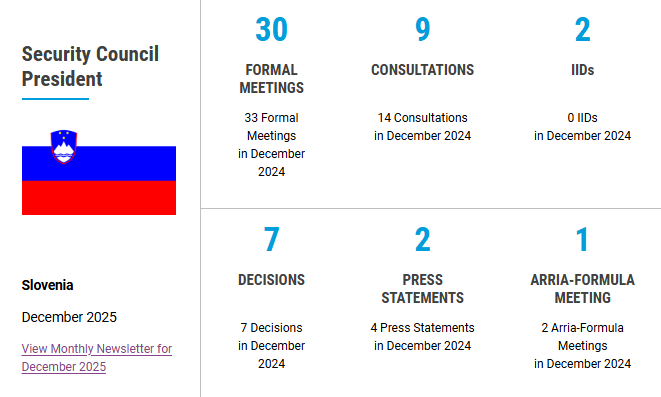
    Slovenia will assume the presidency in December.  

  • 28 Nov 2025

    Myanmar’s planned late-December elections are unfolding in what UN rights officials describe as an atmosphere of fear, violence and deep political repression, with thousands detained and major parties excluded in a process that risks entrenching instability rather than restoring democracy.