|
|
|
|
|

|
|
|
|
|
|
|
|
|
|
|
|
|
|
|
|
|
|
|
|
|
|
|
|
|
|
|
|
|
|
|
|
|
|
|
UN Secretary-General António Guterres on Friday welcomed the resumption of talks between Iran and the United States.
Attacks on Ukraine’s power system highlight how the ongoing war threatens the safety of the country’s nuclear facilities, the head of the International Atomic Energy Agency (IAEA) warned on Friday.
The UN reiterated concerns on Friday over reports that Israeli forces sprayed a highly toxic herbicide over areas north of the Blue Line separating Lebanon from Israel on 1 February.
The global system governing nuclear disarmament is facing its most serious crisis in decades, driven by growing mistrust among major powers and the steady erosion of arms control agreements, a senior disarmament expert has warned.
The UN Secretary-General on Friday strongly condemned an attack on worshippers at a mosque in Pakistan’s capital, Islamabad, after an explosion during prayers reportedly killed dozens and injured many more.
The United Nations has welcomed signs of progress in talks aimed at reducing violence in eastern Democratic Republic of the Congo.
The UN Secretary-General on Thursday strongly condemned a deadly terrorist attack in Kwara state in western Nigeria, where more than 100 people were reportedly killed.
The UN on Wednesday warned of potential humanitarian “collapse” in Cuba, following Washington’s attempt to block oil supplies from reaching the island.
Acute malnutrition among children has reached catastrophic levels in parts of Sudan’s North Darfur and Greater Kordofan, UN-backed analysts warned on Thursday, as conflict, mass displacement and denials of aid push the country deeper into a famine-risk emergency.
The head of UN Peacekeeping on Thursday called for greater support for international police officers deployed to field missions at a time when financial resources are dwindling and multilateralism is waning.
The terrorist group ISIL continues to adapt and demonstrate resilience despite sustained counter-terrorism efforts, a senior UN official told the Security Council on Wednesday.
UN Secretary-General António Guterres has warned that the expiration of the New START treaty represents a “grave moment” for international peace and security, as binding limits on US and Russian strategic nuclear weapons fall away amid heightened global tensions.
As World Cancer Day is marked on Wednesday, thousands of patients in Gaza face worsening illness, untreated pain and closed crossings – despite the limited opening of the vital route through Rafah this week.
South Sudan is buckling under a fresh wave of violence and displacement, after attacks and looting halted a major UN food convoy in restive Upper Nile state and clashes continue to spread in neighbouring Jonglei.
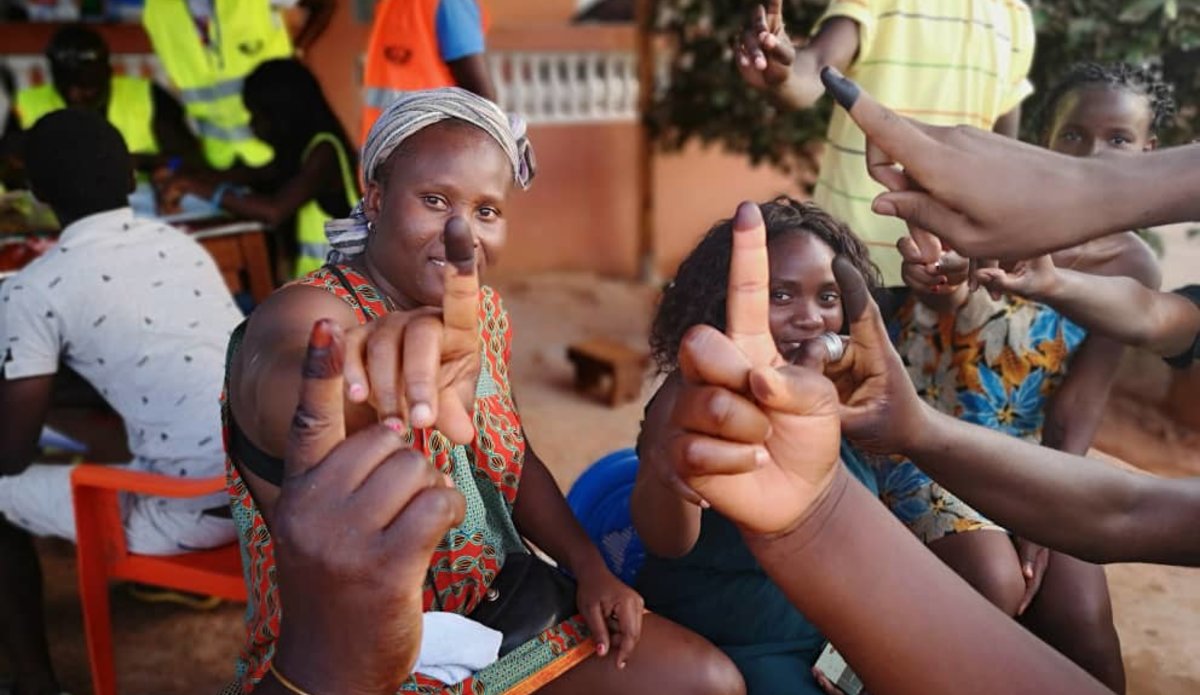
UN electoral assistance is adapting to a rapidly changing global context marked by shrinking civic space, digital transformation and persistent barriers to inclusive participation, particularly for women. Coordinated by DPPA through its Electoral Assistance Division, UN electoral support helps Member States deliver impartial, credible elections that promote peace and prevent conflict, supported in part through the Multi-Year Appeal.
The UN committee mandated to promote Palestinian rights opened its 2026 session on Tuesday with renewed calls for a two-State solution, amid a shaky ceasefire in Gaza and continued settler expansion in the West Bank.
Sudan is now the world’s most severe humanitarian emergency, the UN’s top relief official warned on Tuesday, urging donors and diplomatic partners to act swiftly as the fighting nears a third year with no end in sight.
The partial reopening of the Rafah crossing between Gaza and Egypt has allowed a small number of people to leave and return to the Strip – including critically ill patients – but the UN has warned that far more is needed for the crossing to function as a genuine humanitarian lifeline.
More than 450,000 children in South Sudan are at risk of acute malnutrition as a surge in violence disrupts health and nutrition services, the UN children’s agency (UNICEF) warned on Tuesday.
The reopening of the Rafah crossing in the southern Gaza Strip on Monday after more than a year is being met with both optimism and fear, a senior official with the UN agency that assists the Palestinian people, UNRWA, has said.
UN peacekeepers temporarily suspended patrols and other activities along parts of the ‘Blue Line’ in southern Lebanon after the Israeli military said it would release what it described as a non-toxic chemical substance near the frontier, the UN said on Monday.
|
|
|
|
|
|
|
|
|
|
|
|
|
|
|
|
|
|
|
|
The war in Ukraine remains the world’s biggest threat to nuclear safety as a fifth year of combat looms, the head of the UN nuclear watchdog warned on Friday, citing continued risks to power supplies at nuclear sites vulnerable to fighting nearby.
Five years after Myanmar’s military seized power and jailed the country’s elected leaders, the United Nations says the country’s crisis has only deepened, marked by escalating violence, mass displacement and a military-controlled election that UN officials warn has further entrenched repression rather than restored civilian rule.
Reaching a single child in Sudan’s Darfur region can take days of negotiations, security clearances and travel across sandy roads that cut through shifting frontlines, UNICEF warned Friday – as children live “on the brink” of survival.
Military tensions in South Sudan are “rapidly expanding” between Government forces and opposition militia as fighting continues in restive Jonglei state.
When the United States ordered airstrikes on Christmas Day against Islamist militants in northern Nigeria, officials in Washington said the action was aimed at protecting Christians facing threats of violence.
With global tensions rising and “reckless actions” triggering dangerous consequences, UN Secretary-General António Guterres on Thursday called for renewed efforts on peace, justice and sustainable development as he outlined his priorities for 2026 – the final year of his tenure.
In Sudan, where the devastating conflict between the Sudanese army and rival paramilitary Rapid Support Forces is nearing the end of its third year, more than three million people have returned to their areas of origin, the International Organization for Migration (IOM) announced on Thursday.
UN Secretary-General António Guterres will hold his official start-of-the-year press conference today at noon in New York, setting out his priorities for 2026 and why the UN has a crucial and positive role to play in an increasingly unstable and dangerous world. Speaking to journalists at UN Headquarters, he is expected to outline the major challenges facing the international community and the best path ahead.
The world's youngest country, South Sudan, is facing continued instability and violence as military escalation looms, following reports earlier this week that a senior army commander had called on troops to inflict indiscriminate violence against civilians in Jonglei state.
The UN Security Council is holding a high-level open debate on the Middle East which is expected to focus on the Gaza peace plan – including the role of President Donald Trump’s Board of Peace – the continuing humanitarian crisis in the enclave and turmoil in the West Bank and East Jerusalem, following the demolition of UNRWA’s headquarters there. Follow live coverage below, and UN News app users can click here.
The start of a second phase of a stabilisation plan for Gaza offers a potential turning point for the war-ravaged enclave, a senior UN official told the Security Council on Wednesday.
Despite a modest increase in humanitarian assistance, the situation in Gaza remains “dire”, with children among the hardest hit by shortages of shelter, basic services and education, the United Nations said on Tuesday.
The Security Council adopted a resolution on Tuesday that renews the mandate of the UN Mission in the Yemeni port city of Hudaydah for a final two-month period through 31 March of this year.
Warning that the “rule of law is being replaced by the law of the jungle,” the UN Secretary-General on Monday urged world powers to recommit to international law as the foundation of peace, justice and multilateral cooperation.
The fragile ceasefire in the Gaza Strip is making a difference to the lives of over a million children, and improving overall access to food - but more aid still needs to enter.
The UN Mission in South Sudan (UNMISS) is sounding the alarm over the threat of escalating violence in Jonglei state which is putting lives at risk and further weakening prospects for peace.
When fighting recently intensified near her neighbourhood in Aleppo, in northern Syria, Fatima and her family had to run.
The head of embattled UN relief agency for Palestinians, UNRWA, has condemned reports that its headquarters in East Jerusalem have been set alight deliberately.
The senior UN official in Ukraine, Matthias Schmale, has issued a condemnation of the massive overnight Russian drone and missile strike on several major Ukrainian cities, killing and injuring civilians, and knocking out energy infrastructure amid sub-zero temperatures.
|
|
|
|
|
|
|
|
|
|
|
|
|
|
|
|
Amid reconstruction talks on Gaza linked to President Trump's just-launched Board of Peace, UN aid agencies insisted on Friday that what Gazans need most is immediate relief from the ongoing humanitarian catastrophe there.
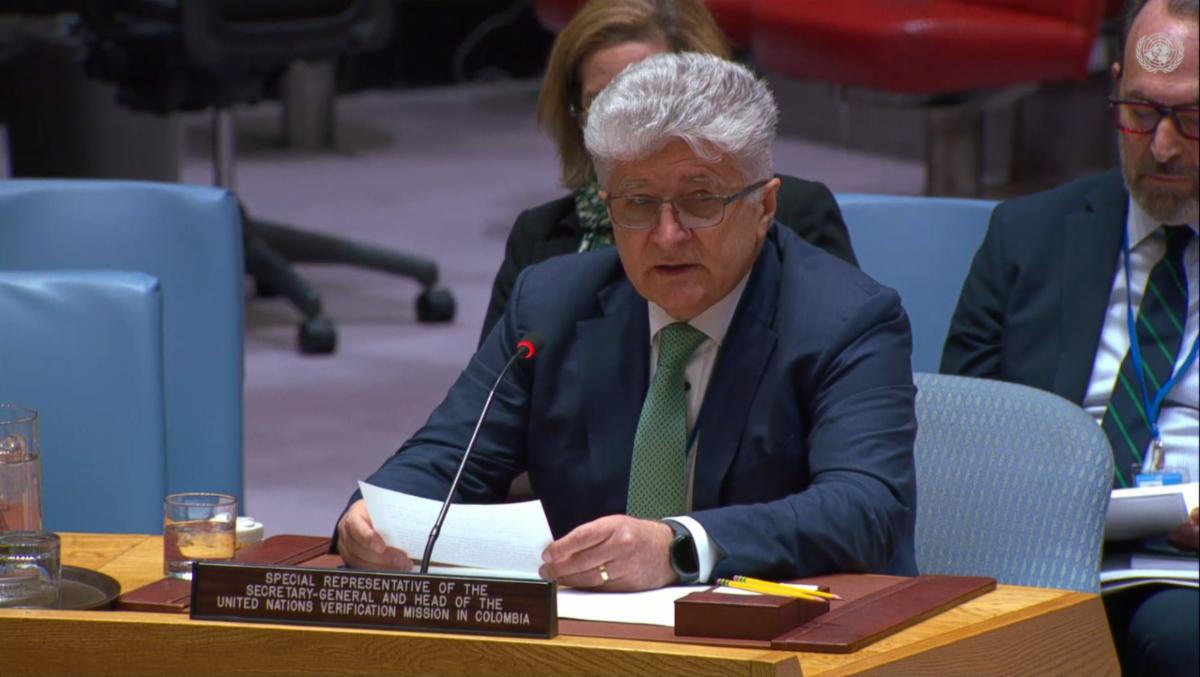
The new year provides an opportunity for Colombia to keep advancing towards lasting peace, a decade after a landmark accord that ended more than 50 years of conflict, the UN Special Representative told the Security Council on Friday.
As people in war-torn Ukraine face the coldest winter in more than a decade, authorities and humanitarians are working to help them stay warm, particularly the most vulnerable residents.
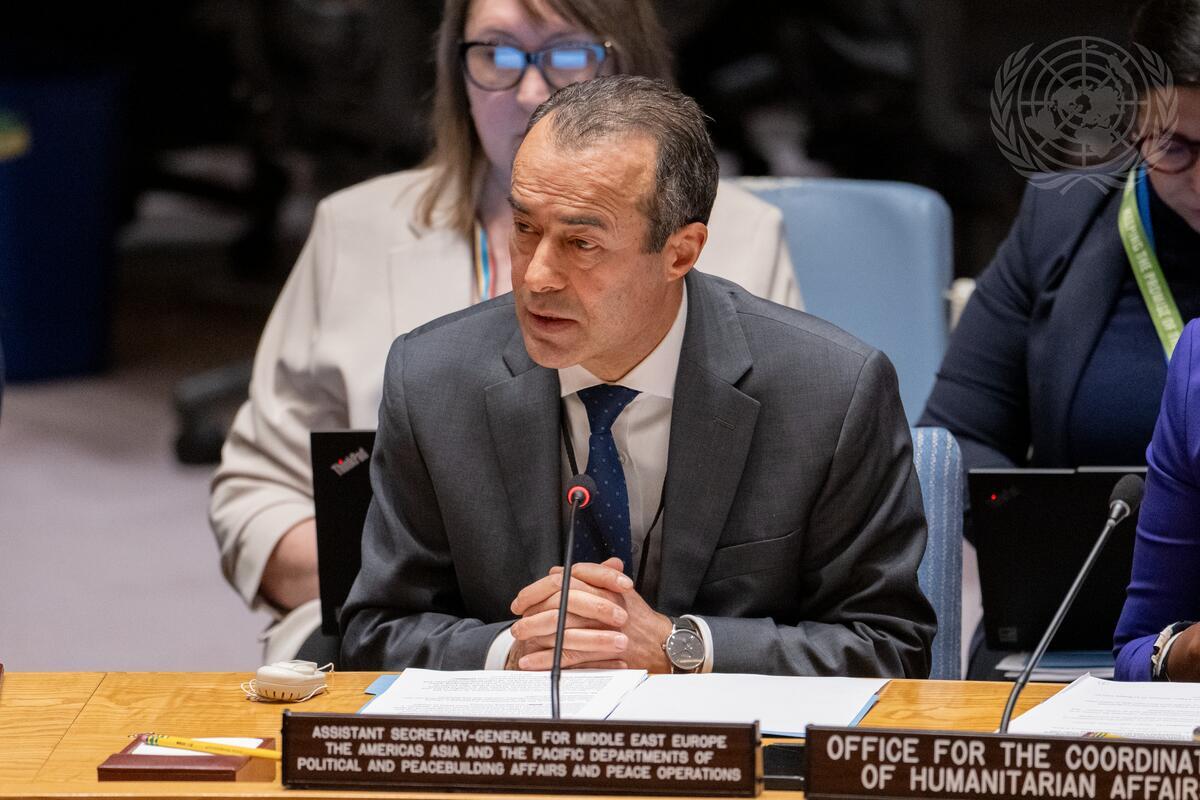
Mr. President, members of the Security Council,
Our first meeting on Syria in this new year takes place against the backdrop of significant developments in northern and northeastern Syria.
While these developments have advanced rapidly in recent days and the situation remains fluid, let me briefly recap the key events of the past weeks. A further round of talks between the Syrian Government and the Syrian Democratic Forces to implement the 10 March 2025 agreement on 4 January did not yield progress.
Shortly after, clashes erupted in and around the SDF-controlled neighborhoods of Aleppo city - Ashrafieh and Sheikh Maqsoud. Following several days of intense fighting, and in the context of measures taken by the Syrian government to alleviate the impact on civilians, such as humanitarian corridors, reports from various public sources indicate that tens of thousands fled, most of whom have started to return, dozens were killed, hundreds were wounded, and persons are still missing.
On 11 January, the SDF withdrew east of the Euphrates to northeast Syria.
On 17 January, Syrian Government forces moved across the Euphrates and took control of broader swathes of territory from the SDF, with local populations in these areas also taking over of territory from the SDF in many instances.
With mediation from the United States and others international partners, on 18 January a “Ceasefire and Full Integration Agreement” between President al Sharaa and SDF leader General Mazloum Abdi was announced, to halt the fighting and ensure the full integration of all three northeast governorates under central government control. However, a subsequent meeting on 19 January between them failed to resolve implementation and fighting resumed.
On 20 January, the Syrian Presidency announced a “shared understanding” between the Government and the SDF, providing the SDF a four-day period for consultation, and the SDF expressed its commitment to a ceasefire.
Mr. President,
We are now two days into this critical period. As I speak, the situation on the ground remains very tense, with exchanges of fire and clashes between Government forces and the SDF in parts of Hasekeh governorate and also on the outskirts of Ayn al Arab, also known as Kobane - an SDF-controlled enclave where access is challenging, given ongoing clashes. Let me note that there is an alarming humanitarian and protection crisis, with an urgent need for all sides to ensure the protection of civilians and civilian infrastructure, and to ensure immediate and unimpeded humanitarian access.
The Secretary-General expressed his concern about the continuing violence and strongly called for full respect for international law and the protection of civilians, and urged the parties to continue dialogue and to move forward in good faith, working together to secure the implementation of all agreements.
We strongly appeal for both sides to immediately adhere to a ceasefire in line with the 18 January agreement, and engage in fleshing out and implementing the details of this latest understanding of 20 January swiftly and in a spirit of compromise, in order to ensure a peaceful integration of north-east Syria in support of Syria’s broader transition.
It is important also to note the recent Decree no. 13 announced by President al-Sharaa concerning the linguistic, cultural, and citizenship rights of Syrian Kurds within the Syrian state. This is a crucial issue for the future, and the decree is an encouraging initiative on which to build further through a genuinely inclusive process.
Mr. President,
Last month, on your visiting mission to Syria, ahead of the first anniversary of the fall of the Assad government, you witnessed firsthand the achievements, opportunities and challenges facing the Syrian people in this new chapter for a Syria moving toward equal citizenship.
The United Nations fully supports and encourages Syrian efforts to advance an inclusive political transition, equitable political participation by all components of Syrian society and meaningful participation by women to strengthen national cohesion and unity. And we look forward to the next milestones in Syria’s transition – the full formation of the People’s Assembly and the establishment of the Committee to draft the permanent constitution and the Constitutional Court— reflecting these principles.
We acknowledge the important steps the Syrian Government is taking to achieve justice for the victims of abuses and to combat impunity, both past and present. The Syrian people across the board are also asking for, and deserve more in this area. The United Nations looks to further support these efforts. They are critical for restoring and sustaining peace, justice and accountability.
Mr. President,
One year into this political transition, much has been achieved in post-Assad Syria. The fact that almost three million refugees and internally displaced persons have returned attests to that. Yet the country remains extremely fragile after 14 years of devastating conflict.
ISIL is still a persistent threat. As the Syrian government has joined forces with international partners in the Global Coalition Against Daesh to address this threat, we continue to encourage international cooperation in this area. It is vital that ISIL is not allowed to capitalize on the fluid situation in the northeast.
We share concerns about the presence of foreign terrorist fighters in Syria. During the fighting in northeast Syria, control of some of the detention centers for ISIL fighters switched from the SDF to Government forces, as did al-Hol camp in Hasakeh. There are indications that some detainees escaped. We appeal for full attention to be given to ensure that the transfer to the Syrian government of ISIL detention facilities still under SDF control is done in an orderly manner. Separately, the United States announced on 21 January its mission to transfer ISIL detainees from Syria to Iraq, with 150 ISIL members held in Hasakeh already transported to a secure facility in Iraq.
Mr. President,
Tensions persist along sectarian and ethnic lines often fueled by hate speech and disinformation. The wounds along Syria’s coast, in the north and in the south remain unhealed, with triggers all around to upset the fragile stability.
On 26 December, a deadly attack occurred at the Ali Bin Abi Talib Mosque in Homs, which the Secretary-General strongly condemned, emphasizing that attacks against civilians and religious sites are unacceptable. The Syrian Foreign Ministry condemned the attack and emphasized its commitment to counterterrorism efforts and to ensuring security for all Syrians. Subsequently, the Syrian authorities prevented an attempted attack on a church in Aleppo.
Mr. President,
We note with concern the unresolved differences and escalating rhetoric in Sweida governorate. Sporadic armed clashes between Syrian forces and local groups and militia are concerning, as are the reported intra-Druze tensions including detentions and assassinations in areas of Sweida outside of government control. The United Nations continues to urge the parties to engage with the ‘Amman roadmap’ of 16 September 2025 and implement confidence-building measures to restore trust and bring stability to Sweida.
Israeli incursions in southern Syria continue to undermine Syria’s sovereignty and territorial integrity. We welcome this Council’s extension of UNDOF’s mandate for another six months. Let me reiterate the Secretary-General’s call on Israel to refrain from violations of Syrian sovereignty and territorial integrity. Let me also appeal to the parties to respect the terms of the 1974 Disengagement of Forces Agreement and call for the withdrawal of Israeli forces from areas it entered after 8 December 2024. In this regard, we are encouraged by resumed contacts between Syria and Israel to seek mutually acceptable security arrangements.
Mr. President,
The United Nations remains committed to supporting Syria in charting a path to peace, stability, and prosperity in challenging domestic and regional environments. We look forward to deepening our engagement with the Syrian authorities to help ensure that this transition is inclusive, sustainable, and ultimately successful. And we look forward to continuing to engage widely among Syrians, including civil society, women’s groups, and all Syrian communities.
To that end, the Secretary-General has appointed a new Deputy Special Envoy for Syria, Mr. Claudio Cordone, who will advance the United Nation’s support for Syria’s political transition, and a new Resident and Humanitarian Coordinator, ad interim, Ms. Nathalie Fustier, to support Syria’s recovery.
We stand ready to serve as a trusted partner to Syria in advancing this transition in conditions of trust and legitimacy, fostering recovery, and promoting long-term stability. In this context, we seek to see the Office of the Special Envoy for Syria on the ground to engage in a structured and supportive way throughout this transition, to deliver these objectives more effectively and efficiently, ensuring closer engagement and better coordination of resources. We look forward to furthering the dialogue with the Syrian government in this regard.
Thank you, Mr. President.
As President Trump launched the international Board of Peace plan for Gaza on Thursday, top independent rights experts tasked by the UN Human Rights Council with investigating grave abuses linked to the Hamas-Israel war pledged to continue their work seeking justice and accountability for all.
A tense standoff between the Syrian Government and Kurdish-led forces in the country’s northeast risks igniting wider instability just as Syria struggles to emerge from years of conflict and authoritarian rule, senior UN officials told the Security Council on Thursday.
United Nations Deputy Secretary-General Amina Mohammed urged countries to protect the UN Charter in a powerful speech to the Danish Parliament on Thursday, urging countries to “stand up for a rules-based order” – or pay the price.