Indigenous Peoples — around 476 million across 90 countries — are among the planet’s fiercest biodiversity guardians. And many live on the frontlines of conflict: 80 percent of armed conflicts globally are unfolding in biodiversity-rich hotspots. Indigenous women in particular bear the brunt of these overlapping crises, even as they lead the way in advancing climate and peace initiatives.
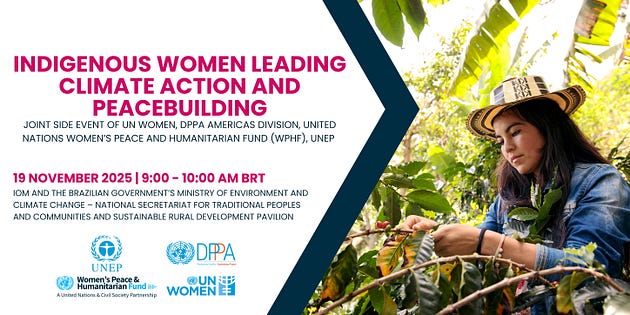
Against this backdrop, DPPA, UN Women, the United Nations Women’s Peace and Humanitarian Fund (WPHF) and the United Nations Environment Programme (UNEP) — supported by the Global Alliance of Indigenous Peoples, Gender Justice and Peace — brought together Indigenous women leaders on 19 November 2025, at the COP30 joint Pavilion of IOM and the Brazilian Ministry of Environment and Climate Change. The session spotlighted the powerful nexus between Indigenous women’s leadership, climate action and peace, aligning with COP30 Goals 6 and 19 and SDGs 5, 13 and 16.
Binalakshmi Nepram, Indigenous peacebuilder from Manipur, India, and moderator of the event, opened the discussion with a clear message: Indigenous women remain excluded from global climate and peace decision-making, even though they are essential to solutions. She highlighted the role of the Global Network of Indigenous Peacebuilders in amplifying their voices.
Speakers from four continents shared powerful testimonies.
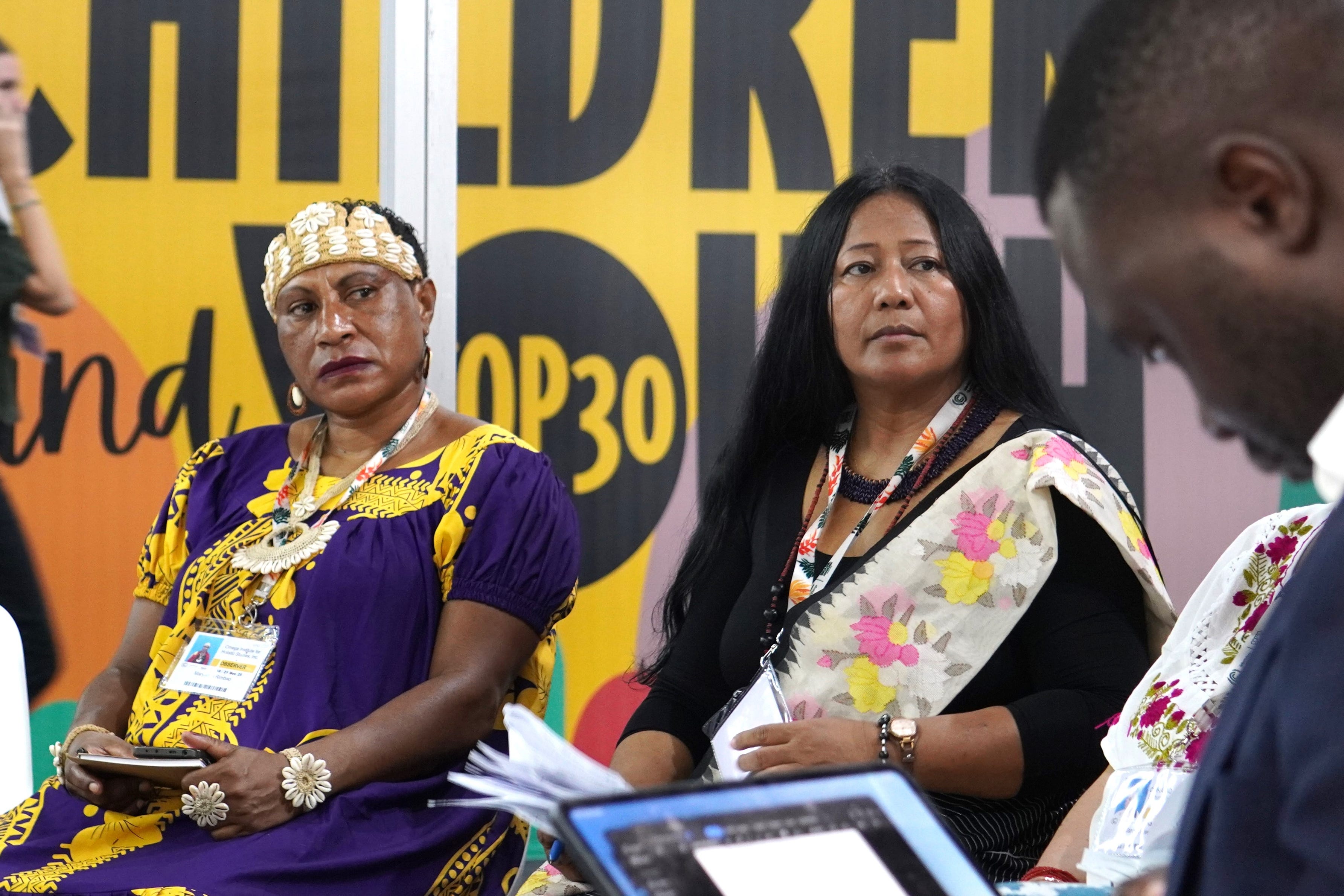


Maryanne Rimbao, founder and director of Humanity and Nature Indigenous Women’s Association of Papua New Guinea (PNG), described how her country is experiencing rising sea levels, landslides and climate-induced displacement. She highlighted how Indigenous women mediate conflicts and protect communities despite cultural stigma and ongoing risks.
Tarcila Zea Rivera, an Indigenous woman from Peru and director of the Center for Indigenous Cultures of Peru, CHIRAPAQ, explained how extreme heat and other climate impacts threaten food security in forest and Andean communities, stressing that peace requires understanding ecosystems, embracing intercultural knowledge and respecting Indigenous knowledge.
Nohora Alejandra Quiguantar, Indigenous youth leader and environmental human rights defender from Colombia, illustrated how Indigenous women are leading land recovery, forest restoration and community revitalization in areas affected by conflict and climate change. She added, though, that programs focusing on climate and women, peace and security remain insufficient.
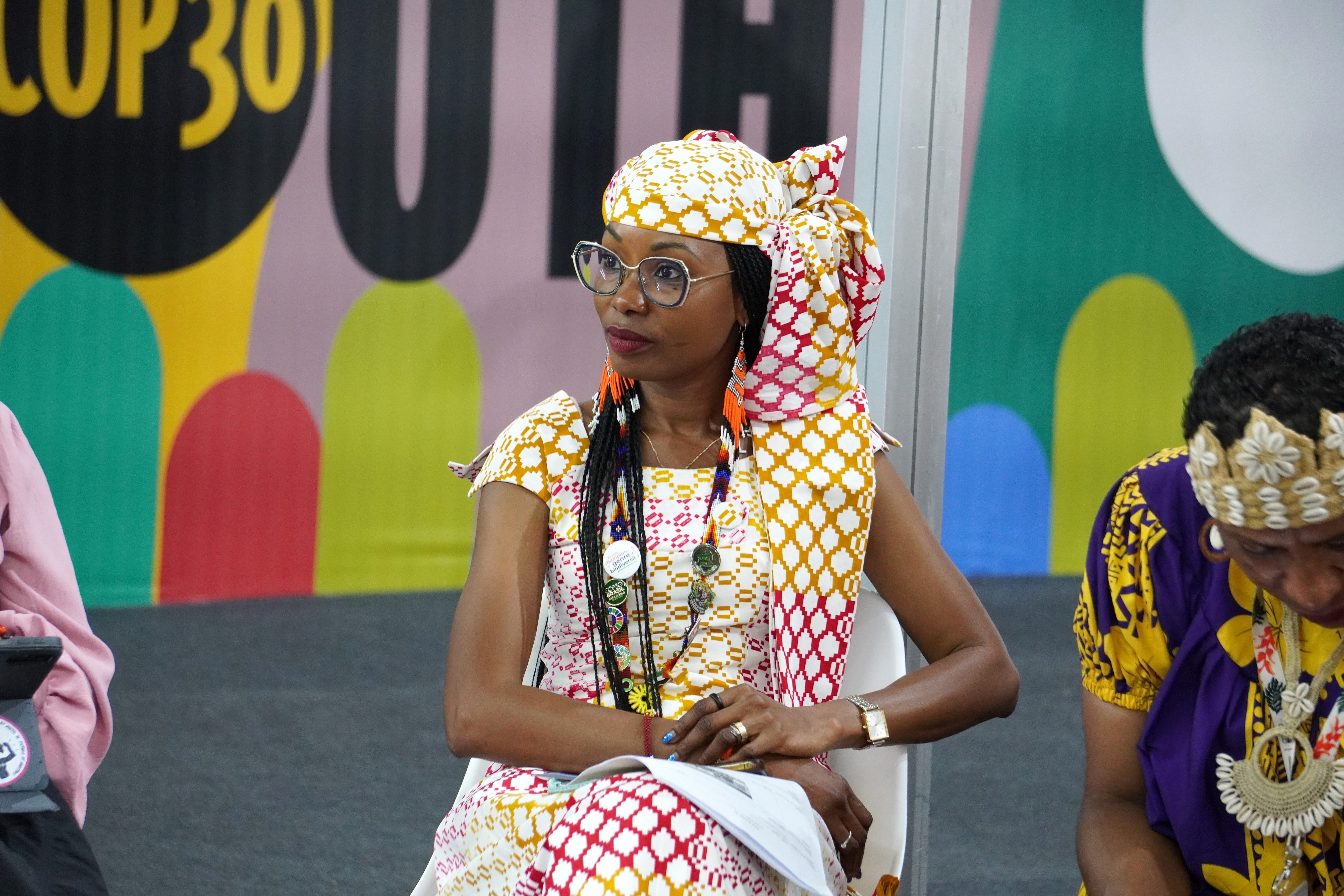
Hindou Oumarou Ibrahim, Member of the UN Permanent Forum on Indigenous issues and founder of the Association for Indigenous Women and Peoples of Chad, described how droughts, floods and desertification in the Sahel drive conflict and insecurity, with Indigenous women disproportionately affected and lacking access to resources.
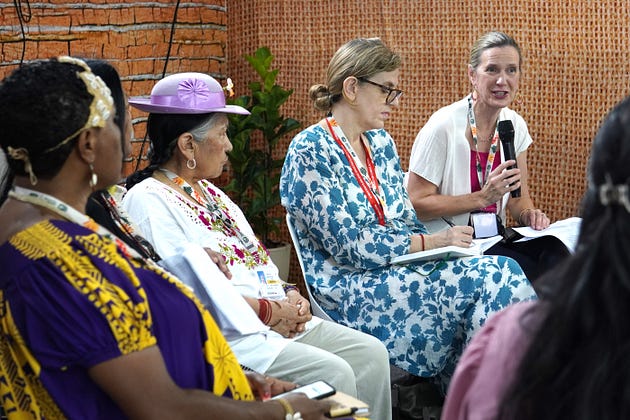
Across all interventions, a common theme emerged: only a fraction of bilateral aid in conflict settings targets gender equality, and funding for initiatives that link climate action with Women, Peace and Security is exceedingly rare. This gap severely limits the scale and impact of Indigenous women’s grassroots initiatives.
From the UN System, Sarah Hendriks, Director of the Policy, Programme and Intergovernmental Division at UN Women, emphasized that while Indigenous women are leading innovative environmental protection and conflict-prevention efforts, they face severe risks. She urged the global community to commit predictable, flexible, and accessible financing and protect Indigenous women’s rights and leadership. Tendai Kasinganeti, Climate, Peace and Security Advisor with the UN Office to the African Union (UNOAU), underscored ongoing UN efforts to integrate climate related risks into peace and prevention work, with a focus on conflict-sensitive, inclusive approaches that empower Indigenous women.
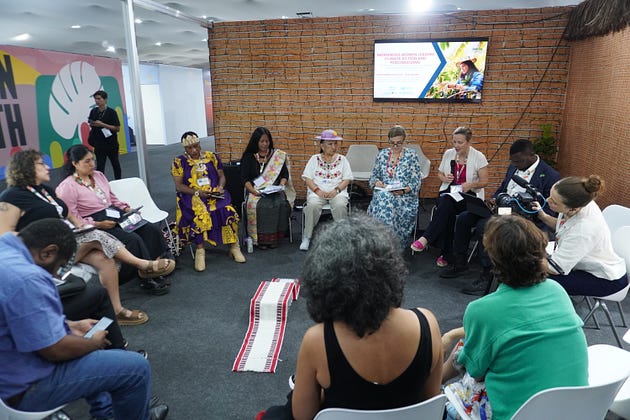
Meanwhile, Ambassador Mateja Vodeb Ghosh, Head of Sector for Global Challenges at the Ministry of Foreign and European Affairs of Slovenia, highlighted how her country linked women, peace and security with climate issues during its Security Council term (2024–2025) and the vital leadership of Indigenous women in these interconnected areas.
The session concluded with a united call: to recognize and support Indigenous women’s leadership in climate action, peacebuilding and environmental protection by reflecting their knowledge in global frameworks; to ensure their meaningful participation in climate and peace decision-making; to strengthen Indigenous-led platforms such as the 2026 Second Global Summit on Indigenous Peacebuilding; and to increase funding for gender-responsive, Indigenous-led climate and peace initiatives.