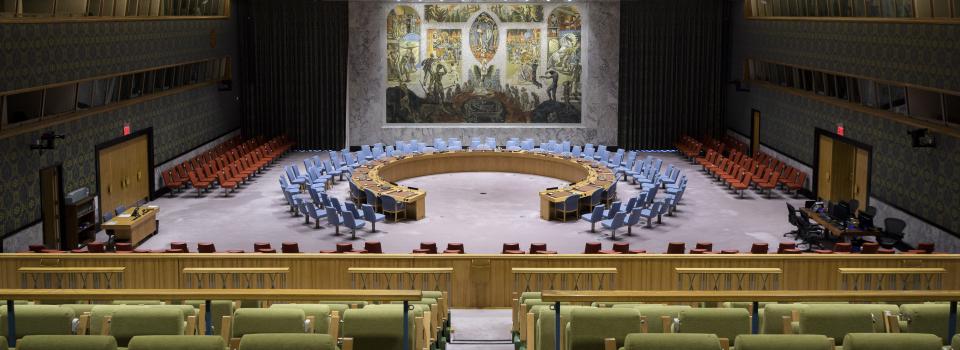
Calling for sweeping reforms of global institutions, UN Secretary-General António Guterres told African leaders on Saturday that the absence of permanent African seats on the Security Council is “indefensible,” declaring: “This is 2026 – not 1946.”
Calling for sweeping reforms of global institutions, UN Secretary-General António Guterres told African leaders on Saturday that the absence of permanent African seats on the Security Council is “indefensible,” declaring: “This is 2026 – not 1946.”
|
|
|
|
|
|
|
|
|
|
|
|
|
|
|
|
|
|
|
A sharp increase in drone attacks across the Kordofan region in the centre of Sudan is endangering civilians and damaging critical infrastructure.
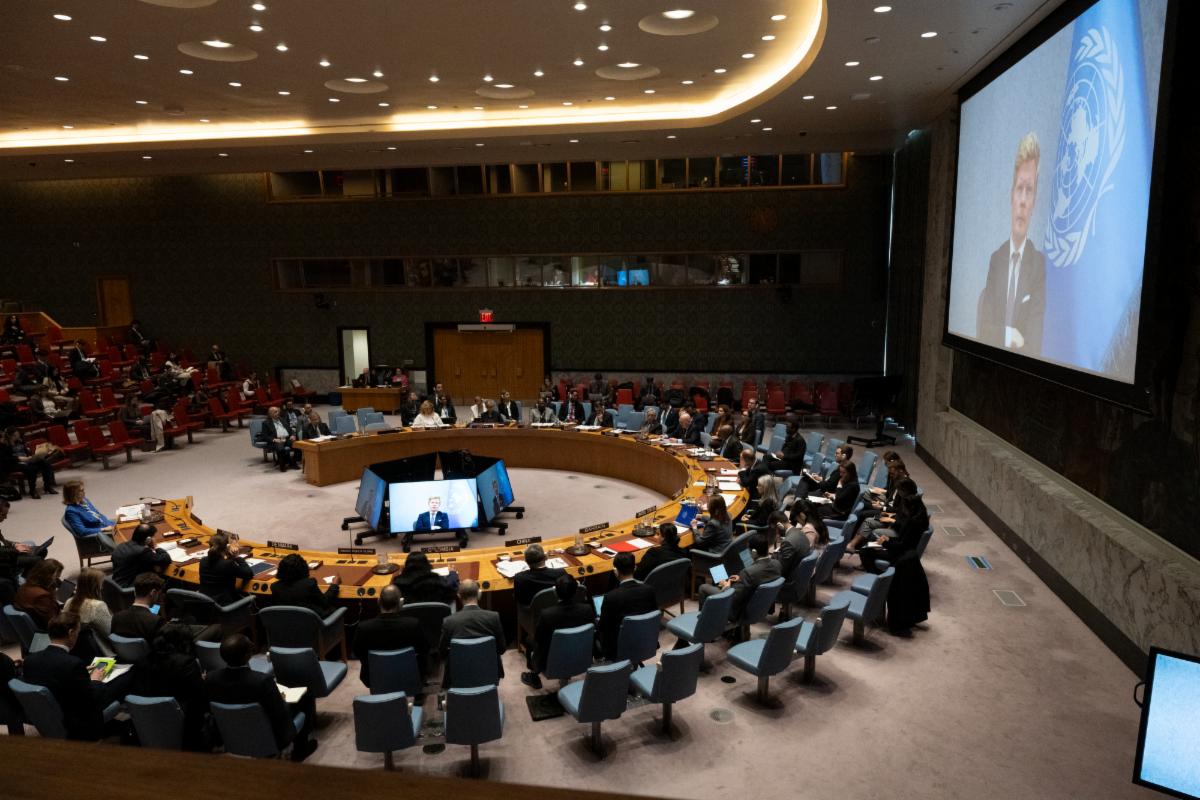
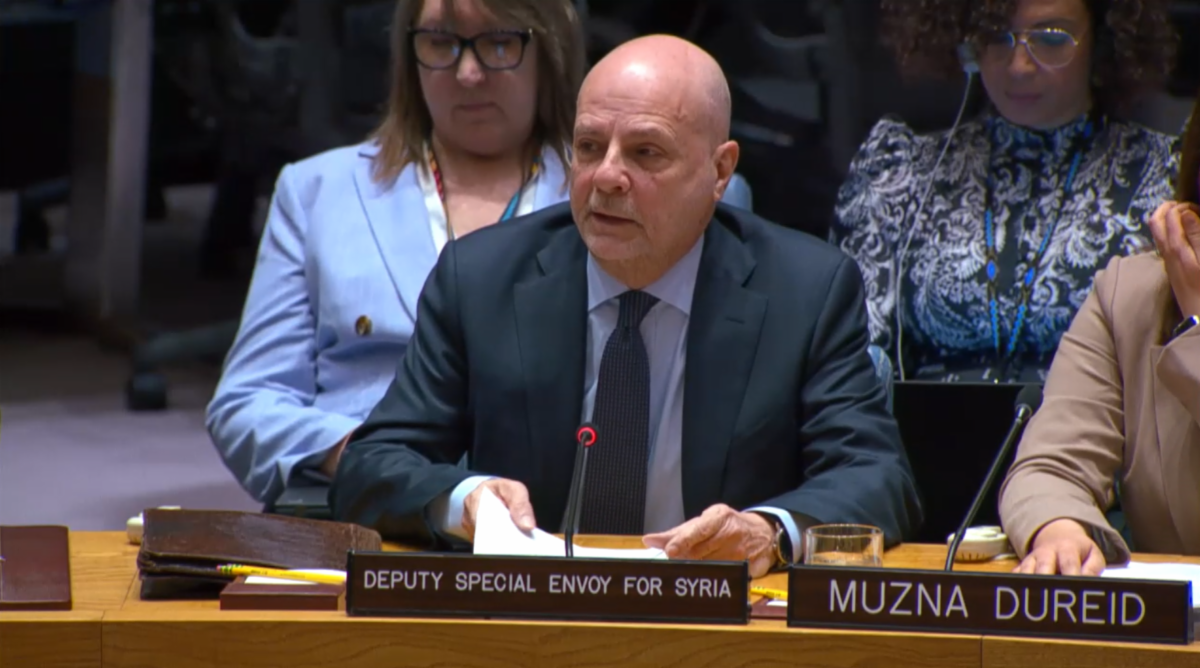
Syria’s fragile political transition has gained fresh momentum with a landmark agreement between Damascus and Kurdish authorities in the northeast, but renewed violence in the south, Israeli incursions and deep humanitarian needs underscore how precarious the path to stability remains, senior UN officials told the Security Council on Friday.

Indigenous Peoples — around 476 million across 90 countries — are among the planet’s fiercest biodiversity guardians. And many live on the frontlines of conflict: 80 percent of armed conflicts globally are unfolding in biodiversity-rich hotspots. Indigenous women in particular bear the brunt of these overlapping crises, even as they lead the way in advancing climate and peace initiatives.
Against this backdrop, DPPA, UN Women, the United Nations Women’s Peace and Humanitarian Fund (WPHF) and the United Nations Environment Programme (UNEP) — supported by the Global Alliance of Indigenous Peoples, Gender Justice and Peace — brought together Indigenous women leaders on 19 November 2025, at the COP30 joint Pavilion of IOM and the Brazilian Ministry of Environment and Climate Change. The session spotlighted the powerful nexus between Indigenous women’s leadership, climate action and peace, aligning with COP30 Goals 6 and 19 and SDGs 5, 13 and 16.
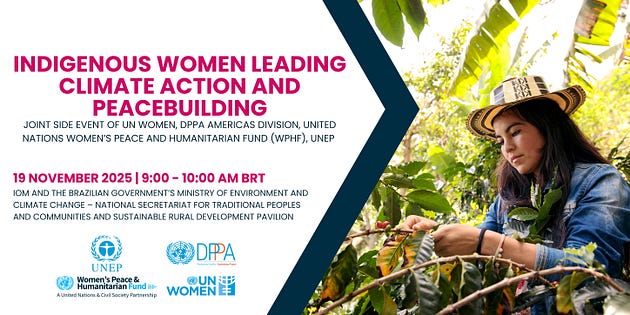
Binalakshmi Nepram, Indigenous peacebuilder from Manipur, India, and moderator of the event, opened the discussion with a clear message: Indigenous women remain excluded from global climate and peace decision-making, even though they are essential to solutions. She highlighted the role of the Global Network of Indigenous Peacebuilders in amplifying their voices.
Speakers from four continents shared powerful testimonies.
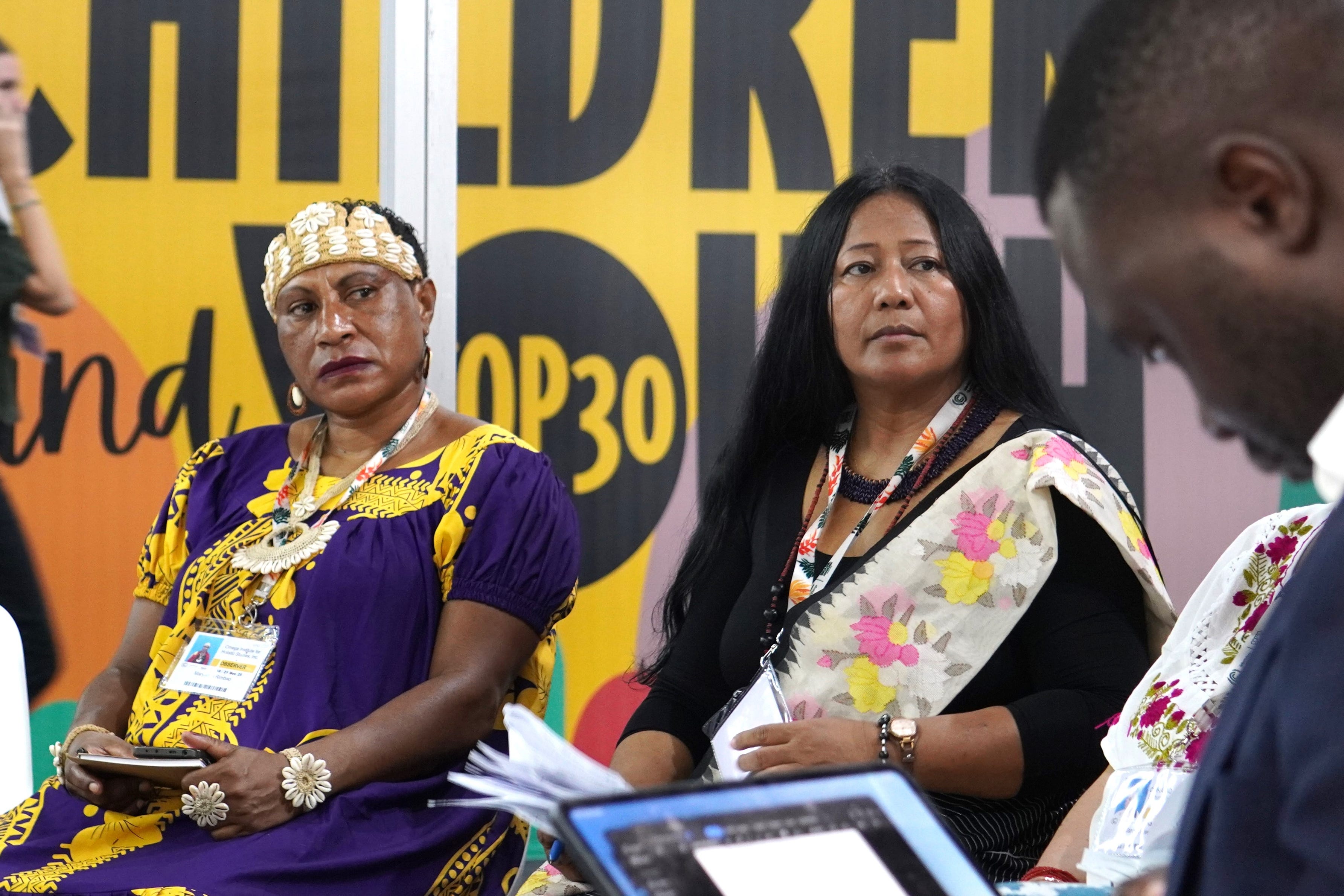


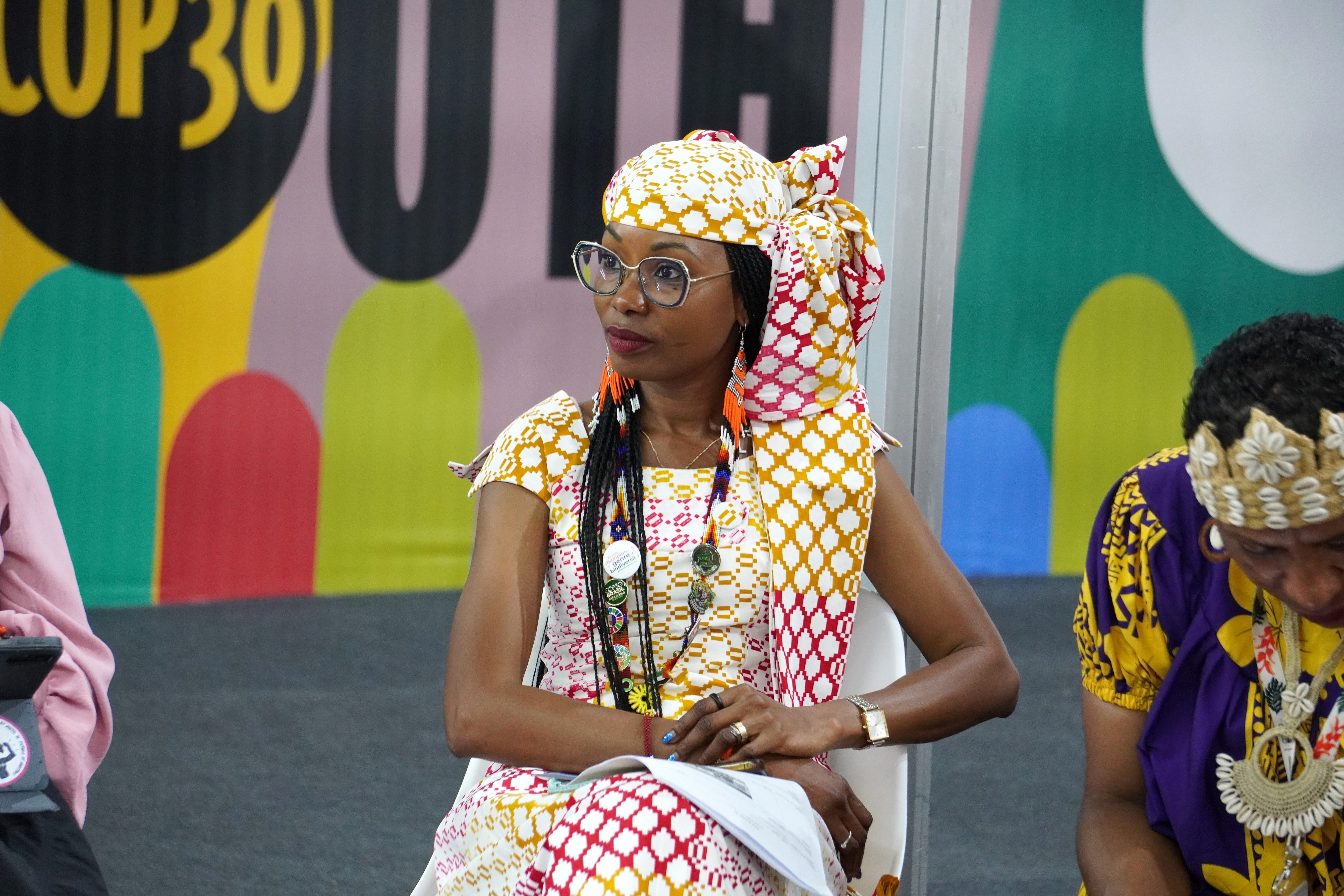
Maryanne Rimbao, founder and director of Humanity and Nature Indigenous Women’s Association of Papua New Guinea (PNG), described how her country is experiencing rising sea levels, landslides and climate-induced displacement. She highlighted how Indigenous women mediate conflicts and protect communities despite cultural stigma and ongoing risks.
Tarcila Zea Rivera, an Indigenous woman from Peru and director of the Center for Indigenous Cultures of Peru, CHIRAPAQ, explained how extreme heat and other climate impacts threaten food security in forest and Andean communities, stressing that peace requires understanding ecosystems, embracing intercultural knowledge and respecting Indigenous knowledge.
Nohora Alejandra Quiguantar, Indigenous youth leader and environmental human rights defender from Colombia, illustrated how Indigenous women are leading land recovery, forest restoration and community revitalization in areas affected by conflict and climate change. She added, though, that programs focusing on climate and women, peace and security remain insufficient.
Hindou Oumarou Ibrahim, Member of the UN Permanent Forum on Indigenous issues and founder of the Association for Indigenous Women and Peoples of Chad, described how droughts, floods and desertification in the Sahel drive conflict and insecurity, with Indigenous women disproportionately affected and lacking access to resources.
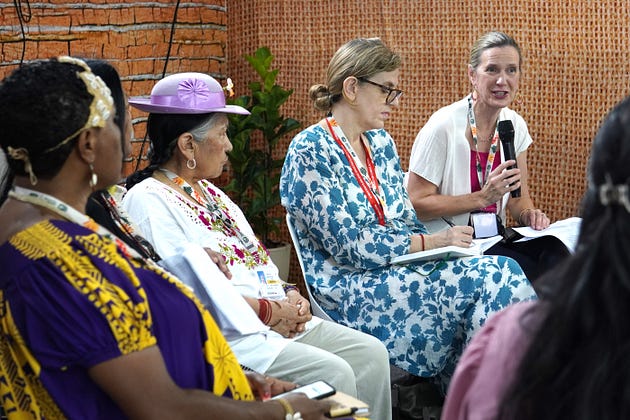
Across all interventions, a common theme emerged: only a fraction of bilateral aid in conflict settings targets gender equality, and funding for initiatives that link climate action with Women, Peace and Security is exceedingly rare. This gap severely limits the scale and impact of Indigenous women’s grassroots initiatives.
From the UN System, Sarah Hendriks, Director of the Policy, Programme and Intergovernmental Division at UN Women, emphasized that while Indigenous women are leading innovative environmental protection and conflict-prevention efforts, they face severe risks. She urged the global community to commit predictable, flexible, and accessible financing and protect Indigenous women’s rights and leadership. Tendai Kasinganeti, Climate, Peace and Security Advisor with the UN Office to the African Union (UNOAU), underscored ongoing UN efforts to integrate climate related risks into peace and prevention work, with a focus on conflict-sensitive, inclusive approaches that empower Indigenous women.
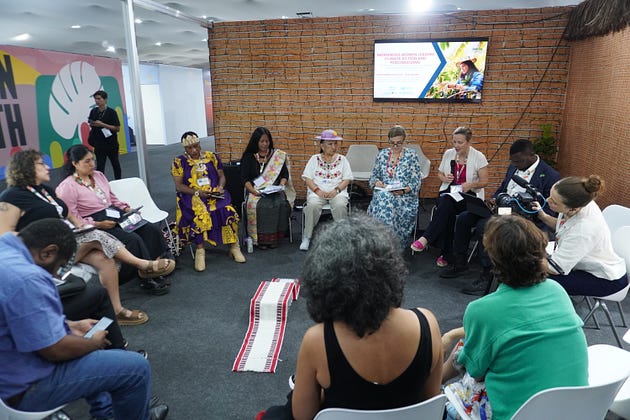
Meanwhile, Ambassador Mateja Vodeb Ghosh, Head of Sector for Global Challenges at the Ministry of Foreign and European Affairs of Slovenia, highlighted how her country linked women, peace and security with climate issues during its Security Council term (2024–2025) and the vital leadership of Indigenous women in these interconnected areas.
The session concluded with a united call: to recognize and support Indigenous women’s leadership in climate action, peacebuilding and environmental protection by reflecting their knowledge in global frameworks; to ensure their meaningful participation in climate and peace decision-making; to strengthen Indigenous-led platforms such as the 2026 Second Global Summit on Indigenous Peacebuilding; and to increase funding for gender-responsive, Indigenous-led climate and peace initiatives.
Amid reported heavy Russian strikes across Ukraine on Thursday, UN human rights chief Volker Türk has condemned the “continual bombardment” the country’s people are facing.
The UN Special Envoy for Yemen on Thursday welcomed recent steps to bolster stability and improve living conditions, but told the Security Council that only a renewed political process can end the country’s long-running conflict.
After three decades of its mandate to protect children caught up in war, the UN’s top advocate on the issue is determined to remind the world that prevention and protection go hand in hand.
A UN humanitarian convoy reached frontline communities in Ukraine’s Dnipro region on Wednesday, delivering critical medical and hygiene supplies as fighting continues to take a heavy toll on civilians and infrastructure across the country.
Escalating aerial attacks in Sudan are killing children, damaging schools and striking United Nations facilities, placing civilians and humanitarian workers at growing risk, the UN warned on Wednesday.
The UN Secretary-General has expressed his sorrow over Tuesday’s deadly shooting at a school in rural Canada that left at least eight dead and 25 wounded.
Broadcaster Rami Al-Sharafi works on a laptop inside the damaged Zaman FM radio station building in Gaza, marking what may seem an unlikely return to the airwaves amid the rubble of the deadly two-year Israel-Hamas war.
Fresh airstrikes and shelling across the Gaza Strip over the past 24 hours have put civilians at renewed risk and compounded months of hardship, the UN said on Tuesday, warning that humanitarian needs continue to outpace access and capacity.
Relentless violence, famine and disease are fuelling a rising death toll among children in Sudan, while attacks on healthcare and a lack of aid access hamper efforts to help them, UN aid agencies warned on Tuesday.
UN human rights chief Volker Türk appealed on Tuesday to all parties involved in renewed heavy fighting in Ethiopia’s ‘precarious’ Tigray region to step back, warning of the potential for a deepening crisis in the country’s war-weary north and beyond.
Escalating violence, political stalemate and humanitarian constraints are pushing South Sudan’s civilians to the brink once again, while funding cuts weaken the UN mission tasked with protecting them.
DPPA is requesting $1.7 million in earmarked contributions for its work on Sudan to respond to escalating crisis demands, strengthen political analysis and reporting, and support sustained good offices and mediation efforts. A fully funded Multi-Year Appeal (MYA) will also enable follow-up to the Pact for the Future, which calls on the Secretary-General to actively leverage his good offices and ensure the United Nations is adequately equipped to lead and support mediation, good offices, and peacemaking in this rapidly evolving context.
DPPA is requesting $800,000 in earmarked contributions for its work on Ukraine to sustain political engagement, fact-finding, and analysis, and to support the United Nations’ good offices amid an evolving and highly complex conflict. A fully funded Multi-Year Appeal (MYA) will ensure the UN remains equipped to provide timely political support, informed reporting, and sustained engagement to advance prospects for peace in line with the UN Charter and relevant resolutions.
DPPA is requesting $3 million in earmarked contributions for our work on the Middle East to sustain mediation, political analysis, and strategic engagement amid multiple interlocking crises. A fully funded Multi-Year Appeal (MYA) will also enable follow-up to the Pact for the Future, which calls on the Secretary-General to actively leverage his good offices and ensure the United Nations is adequately equipped to lead and support mediation, good offices, and peacemaking in this rapidly evolving context.
South Africa has moved to withdraw its peacekeepers deployed at the United Nations Organization Stabilization Mission in the Democratic Republic of the Congo (MONUSCO) after nearly three decades of service.
UN Secretary-General António Guterres voiced grave concern on Monday over the reported decision by the Israeli security cabinet to authorize a series of administrative and enforcement measures in Areas A and B in the occupied West Bank.
As the brutal Sudan war shows no signs of ending, UN human rights chief Volker Türk on Monday called on the international community to intervene immediately to stop more mass killings and other flagrant war crimes against civilians.
The UN Secretary-General has strongly condemned the surge in violence across South Sudan, warning that civilians and aid workers are paying a devastating price as humanitarian operations are increasingly targeted.
|
|
|
|
|
|
|
|
|
|
|
|
|
|
|
|
|
|
|
|
Attacks on Ukraine’s power system highlight how the ongoing war threatens the safety of the country’s nuclear facilities, the head of the International Atomic Energy Agency (IAEA) warned on Friday.
UN Secretary-General António Guterres on Friday welcomed the resumption of talks between Iran and the United States.
The UN reiterated concerns on Friday over reports that Israeli forces sprayed a highly toxic herbicide over areas north of the Blue Line separating Lebanon from Israel on 1 February.
The UN Secretary-General on Friday strongly condemned an attack on worshippers at a mosque in Pakistan’s capital, Islamabad, after an explosion during prayers reportedly killed dozens and injured many more.
The global system governing nuclear disarmament is facing its most serious crisis in decades, driven by growing mistrust among major powers and the steady erosion of arms control agreements, a senior disarmament expert has warned.
The United Nations has welcomed signs of progress in talks aimed at reducing violence in eastern Democratic Republic of the Congo.
The UN Secretary-General on Thursday strongly condemned a deadly terrorist attack in Kwara state in western Nigeria, where more than 100 people were reportedly killed.
Acute malnutrition among children has reached catastrophic levels in parts of Sudan’s North Darfur and Greater Kordofan, UN-backed analysts warned on Thursday, as conflict, mass displacement and denials of aid push the country deeper into a famine-risk emergency.
The head of UN Peacekeeping on Thursday called for greater support for international police officers deployed to field missions at a time when financial resources are dwindling and multilateralism is waning.
The UN on Wednesday warned of potential humanitarian “collapse” in Cuba, following Washington’s attempt to block oil supplies from reaching the island.
UN Secretary-General António Guterres has warned that the expiration of the New START treaty represents a “grave moment” for international peace and security, as binding limits on US and Russian strategic nuclear weapons fall away amid heightened global tensions.
The terrorist group ISIL continues to adapt and demonstrate resilience despite sustained counter-terrorism efforts, a senior UN official told the Security Council on Wednesday.
South Sudan is buckling under a fresh wave of violence and displacement, after attacks and looting halted a major UN food convoy in restive Upper Nile state and clashes continue to spread in neighbouring Jonglei.
As World Cancer Day is marked on Wednesday, thousands of patients in Gaza face worsening illness, untreated pain and closed crossings – despite the limited opening of the vital route through Rafah this week.
UN electoral assistance is adapting to a rapidly changing global context marked by shrinking civic space, digital transformation and persistent barriers to inclusive participation, particularly for women. Coordinated by DPPA through its Electoral Assistance Division, UN electoral support helps Member States deliver impartial, credible elections that promote peace and prevent conflict, supported in part through the Multi-Year Appeal.
The UN committee mandated to promote Palestinian rights opened its 2026 session on Tuesday with renewed calls for a two-State solution, amid a shaky ceasefire in Gaza and continued settler expansion in the West Bank.
Sudan is now the world’s most severe humanitarian emergency, the UN’s top relief official warned on Tuesday, urging donors and diplomatic partners to act swiftly as the fighting nears a third year with no end in sight.
The partial reopening of the Rafah crossing between Gaza and Egypt has allowed a small number of people to leave and return to the Strip – including critically ill patients – but the UN has warned that far more is needed for the crossing to function as a genuine humanitarian lifeline.
More than 450,000 children in South Sudan are at risk of acute malnutrition as a surge in violence disrupts health and nutrition services, the UN children’s agency (UNICEF) warned on Tuesday.
The reopening of the Rafah crossing in the southern Gaza Strip on Monday after more than a year is being met with both optimism and fear, a senior official with the UN agency that assists the Palestinian people, UNRWA, has said.
UN peacekeepers temporarily suspended patrols and other activities along parts of the ‘Blue Line’ in southern Lebanon after the Israeli military said it would release what it described as a non-toxic chemical substance near the frontier, the UN said on Monday.
|
|
|
|
|
|
|
|
|
|
|
|
|
|
|
|
|
|
|
|
Five years after Myanmar’s military seized power and jailed the country’s elected leaders, the United Nations says the country’s crisis has only deepened, marked by escalating violence, mass displacement and a military-controlled election that UN officials warn has further entrenched repression rather than restored civilian rule.
Military tensions in South Sudan are “rapidly expanding” between Government forces and opposition militia as fighting continues in restive Jonglei state.
Reaching a single child in Sudan’s Darfur region can take days of negotiations, security clearances and travel across sandy roads that cut through shifting frontlines, UNICEF warned Friday – as children live “on the brink” of survival.
The war in Ukraine remains the world’s biggest threat to nuclear safety as a fifth year of combat looms, the head of the UN nuclear watchdog warned on Friday, citing continued risks to power supplies at nuclear sites vulnerable to fighting nearby.